Bridal
How much does a Pakistani wedding cost in the USA?
Budget a US Pakistani wedding by metro, guest count, and true landed cost—tax, service charge, travel, attire buffers, and late-added ceremonies included.
By Ayesha Khan
Editor-in-chief
7 min read
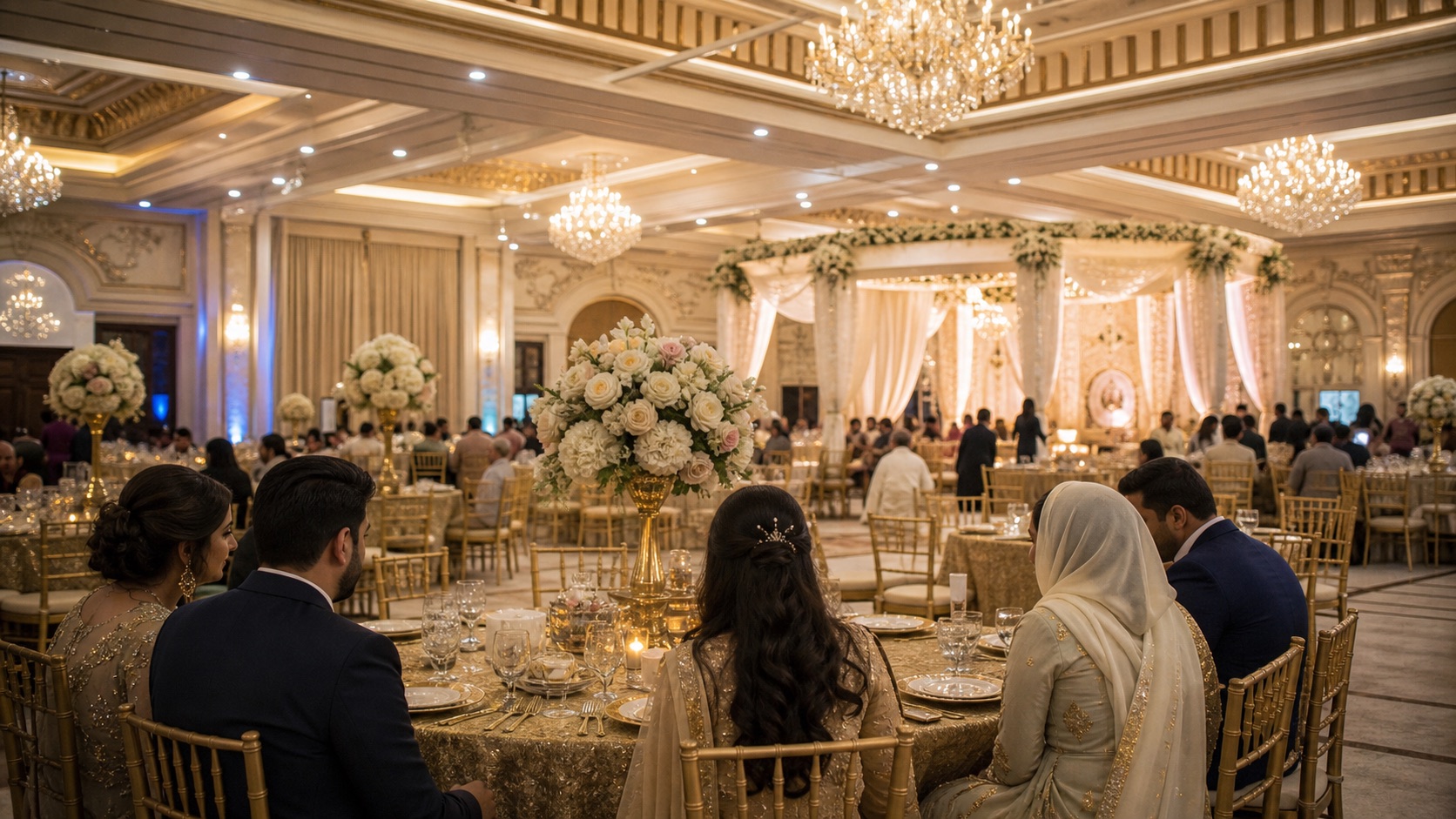
A Houston banquet hall, a New Jersey catering package, and a California estate rental do not belong in one “national average.” Labour, sales tax, cultural catering access, and guest-list norms vary by metro. The useful number is the cost of your defined celebration in your ZIP code, quoted on the same assumptions. This is a budgeting framework for US Pakistani weddings—mehndi, baraat/nikah celebrations, walima, and the smaller gatherings families add—not a promise that any city has a fixed price tag.
Published 2025–2026 planning guides for South Asian and Pakistani weddings in the US commonly describe multi-event celebrations for a few hundred guests that can land anywhere from the mid five figures into six figures once venue, catering, décor, attire, and photo/video are stacked. Treat those bands as orientation only. Your signed quotes beat any blog range. A family WhatsApp “so-and-so spent X” is not a quote unless you know guest count, year, city, and what was included.
Separate the sticker from what you will actually pay
For every proposal, open a spreadsheet with columns for base price, sales tax, mandatory service charge, expected gratuity, delivery, travel, overtime, and card fees. Ask what the service charge funds and whether gratuity is already inside it. Those words are not interchangeable across banquet halls or states.
| Decision | Question that exposes cost |
|---|---|
| Outside caterer | Kitchen fee, insurance, fire rules, loading dock, and cleanup labour? |
| Multiple ceremonies | Separate room turns, staffing resets, and overtime between mehndi and baraat? |
| Clothing from Pakistan | Production buffer, shipping, duties, US alterations, and a backup blouse? |
| Photo and video | How many shooters, hours, travel days, highlight reels, and raw delivery? |
| Alcohol or mocktail bar | Licensing, bartender ratio, glassware, and venue minimum spend? |
Banquet packages that look “all-inclusive” still hide line items: cake cutting, corkage for outside desserts, valet, coat check, and mandatory security for late music. Ask for the last invoice template or a sample BEO (banquet event order), not only the marketing flyer.
Model three guest counts before you fall in love with a ballroom
Price the likely list, a trimmed list, and the contractual maximum the venue will charge. Thresholds for an extra table can cost more than the meals alone. Keep children, vendor meals, and overnight family hospitality inside the count. In many Pakistani-American celebrations, 200–400 guests is ordinary; comparing that plan to a 120-guest hotel package from a mainstream wedding magazine will only invent false savings.
Metro pattern (directionally, not as a quote): New Jersey / New York banquet corridors and coastal California often price higher for the same headcount than Houston or DFW, where competition among South Asian vendors is dense. Always re-quote locally—community WhatsApp recommendations still need written scope.
Build the budget by ceremony, then by household
List each event on its own tab: mehndi, nikkah, baraat/reception, walima, and any dholki or ladies’ lunch that relatives assume is “just small.” Assign a primary host for food, décor, and timing so two aunts do not independently order floral arches for the same room. Then map who is paying which tab—parents, couple, siblings—before taste negotiations begin.
- Set the household contribution before supplier shopping so taste does not negotiate the budget in reverse.
- Keep contingency outside category budgets—access fees, last-minute chaat stations, and an extra mehndi performer appear after moodboards.
- Place deposits and balances on a calendar matched to when each family’s money actually arrives.
- Read cancellation, postponement, and substitution clauses before the first wire.
Attire, beauty, and overseas production buffers
Bridal and family clothing ordered from Pakistan need production, shipping, possible duties, US alterations, and a backup plan if a blouse or sherwani fails. Cost the tailor and a second emergency outfit separately from the Instagram total. Beauty trials, mehndi artists, and hair/makeup overtime after delayed baraats are real lines; a “day-of” package that ends exactly when the barat arrives on paper will fail when the barat arrives late in life.
Jewellery insurance, safe transport between hotel and venue, and who holds the receipt for hired pieces belong on the same sheet as the necklace itself. A beautiful set that cannot be worn because coverage was never confirmed is an expensive prop.
Venue questions that change the total before décor begins
Before you debate floral density, ask the banquet manager for the earliest load-in, the latest load-out, whether mehndi floor covering is included, and how prayer space is handled during a busy Saturday. Ask whether the kitchen can execute a Pakistani menu in-house or requires an approved outside caterer with insurance certificates. Those answers move more money than centrepiece upgrades.
Noise ordinances, neighbour complaints, and hotel quiet hours also truncate dhol and DJ plans. Price a compliant timeline rather than assuming volume equals celebration. If elders need earlier seating and a quieter room, cost that as hospitality—not as an afterthought sofa in a loud lobby.
Photo, video, and content rights
Pakistani wedding days run long. Confirm how many shooters cover overlapping events, whether drone use is permitted by the venue, and who owns raw files versus edited reels. Social clips that require another paid “story package” should be visible before the deposit. A cheaper photographer who disappears after the highlight reel is not a saving; it is a missing archive.
Cash flow, contingency, and the ceremonies that arrive late
For suppliers crossing state lines, confirm travel days, lodging, licensing where relevant, and who pays when flights fail. Do not compare a local team with a destination team until both totals include those obligations. If relatives add a dholki or a second ladies’ event after contracts are signed, price the labour before promising that existing vendors will “just cover it.”
Put money where guests experience care—food served safely, enough time between events, accessible seating, prayer space, and suppliers who know Pakistani timelines—then let decorative ambition fit what remains. A culturally rich wedding is not required to be financially maximal. Update the forecast after every signed change; the only accurate budget is the one that still matches the contracts in the folder.
Keep a one-page summary for elders who will not open the spreadsheet: total range, guest-count assumptions, and the three largest open risks. Clarity prevents last-week panic shopping better than another moodboard.
Finally, treat gifts and jahez expectations as separate from the event budget unless the same household is funding both. Mixing those ledgers is how a carefully quoted walima still produces a surprise wire transfer the week before. Name what is celebration cost and what is transfer of goods, then decide with eyes open.
When a vendor “discounts” by removing hours or staff, record the new scope. A lower number with a thinner team is not the same package. Compare revisions line by line, and keep every change in writing—even when the salesperson prefers voice notes.
Sources and official profiles
Filed under
Keep reading
Related stories
More from this desk, this beat, and the tags on this piece.
Pakistani wedding-dress alterations: the final six-week timeline
Zainab Noor · 13 Sep 2026 · 17 min
Bridal blouse fitting: neckline, sleeves, support and movement
Zainab Noor · 13 Sep 2026 · 15 min
Double dupatta bridal styling without doubling the discomfort
Zainab Noor · 13 Sep 2026 · 15 min
Nikah dupatta guide: coverage, pins, weight and photographs
Zainab Noor · 13 Sep 2026 · 16 min
Readers
The conversation
0 notes
Anyone can leave a note. Guests add a name and email — no account required, and the email is never published.
No notes yet. Yours would be the first.