Bridal
Pakistani bridal dress styles: lehenga, gharara, sharara, and peshwas
A silhouette-led bridal guide that explains how lehengas, ghararas, shararas and peshwas move, fit and behave through a real wedding day.
By Ayesha Khan
Editor-in-chief
3 min read
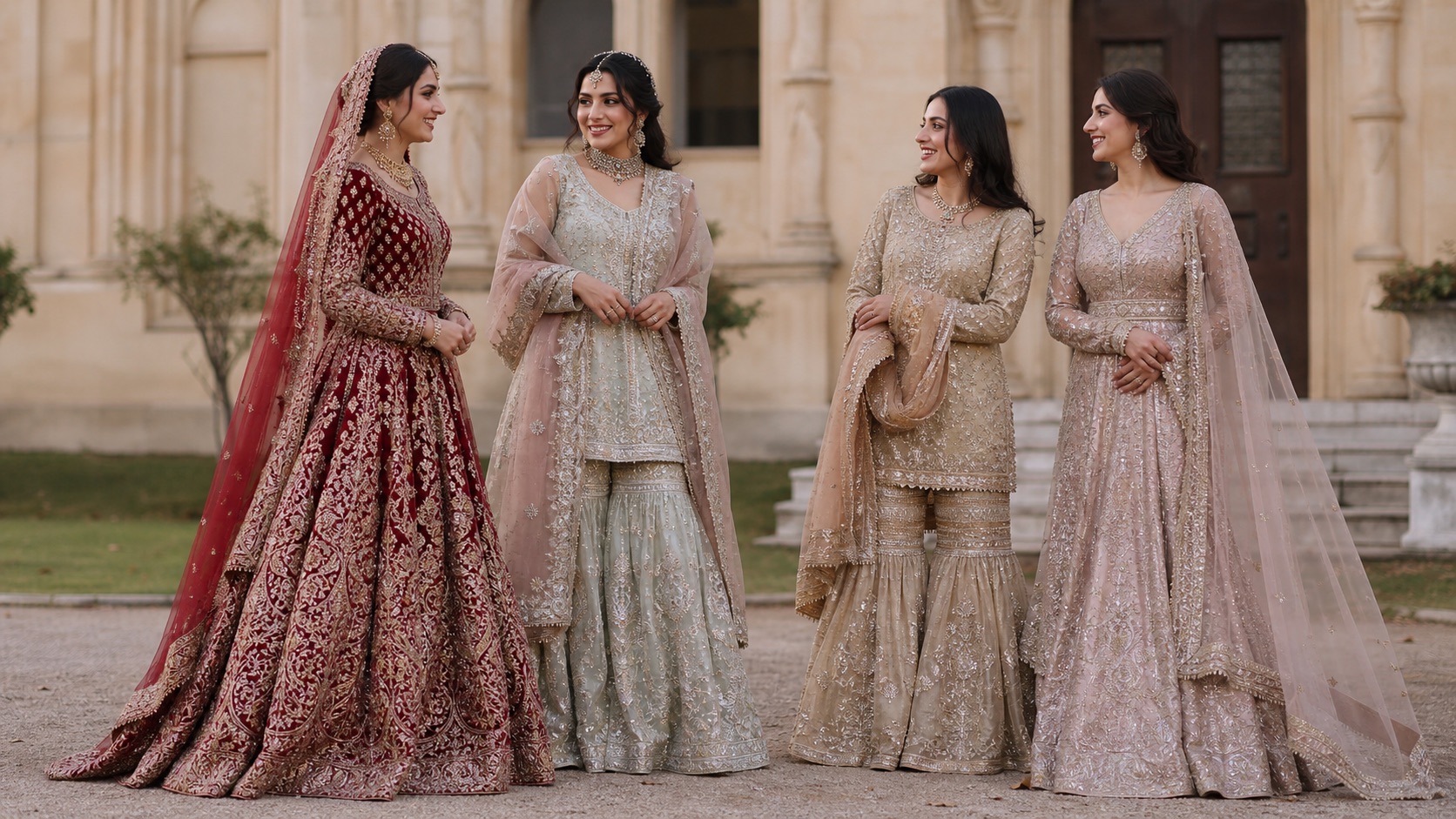
A bridal silhouette is a piece of choreography. It decides how you cross a stage, sit for the nikah, manage stairs, carry a dupatta and make room for the person beside you. That is why choosing between a lehenga, gharara, sharara and peshwas from four campaign photographs rarely works: the names describe families of garments, not one fixed cut.
Lehenga: the skirt carries the visual weight
A lehenga is a separate skirt worn with a blouse, choli or longer top. Its character changes with the cut. Circular panels create sweep; kalis distribute volume; a straighter cut keeps the outline close. Ask for the finished hem circumference, skirt weight and waistband construction. A dramatic skirt can still feel controlled when its weight is supported at the waist and the length is set with the actual shoes.
Gharara: the knee seam is the architecture
A gharara is fitted through the upper leg and opens below a distinct knee join into a generous flare. That join must meet your knee rather than the model's. Too high and the garment can pull when you sit; too low and the intended proportion disappears. Fit it with the kurti length and gota or border in view, because all three lines meet in the same part of the body.
Sharara: volume without the fitted upper leg
Sharara trousers widen from the waist or upper leg without the gharara's defining knee seam. They can be easier for long periods of sitting, but “wide” is not the same as manageable. Check rise, inner-leg length and how the fabric gathers at the waist. Dense embellishment near the hem adds momentum and may catch against the other leg.
Peshwas: fit the bodice before admiring the flare
A peshwas builds its sweep from multiple panels below a fitted or shaped upper body. The shoulder, armhole, bust point and waist placement therefore matter before the circumference does. Ask where the flare begins and whether the bodice has enough seam allowance for a later fitting. A low, heavy hem can pull a poorly fitted neckline out of position over several hours.
None of these shapes belongs exclusively to one ceremony or body type. Family tradition, regional memory and personal taste may matter as much as proportion. The useful question is not “Which style is most flattering?” It is “Which construction lets me recognise myself and move through this particular day without fighting the clothes?”
Filed under
Keep reading
Related stories
More from this desk, this beat, and the tags on this piece.
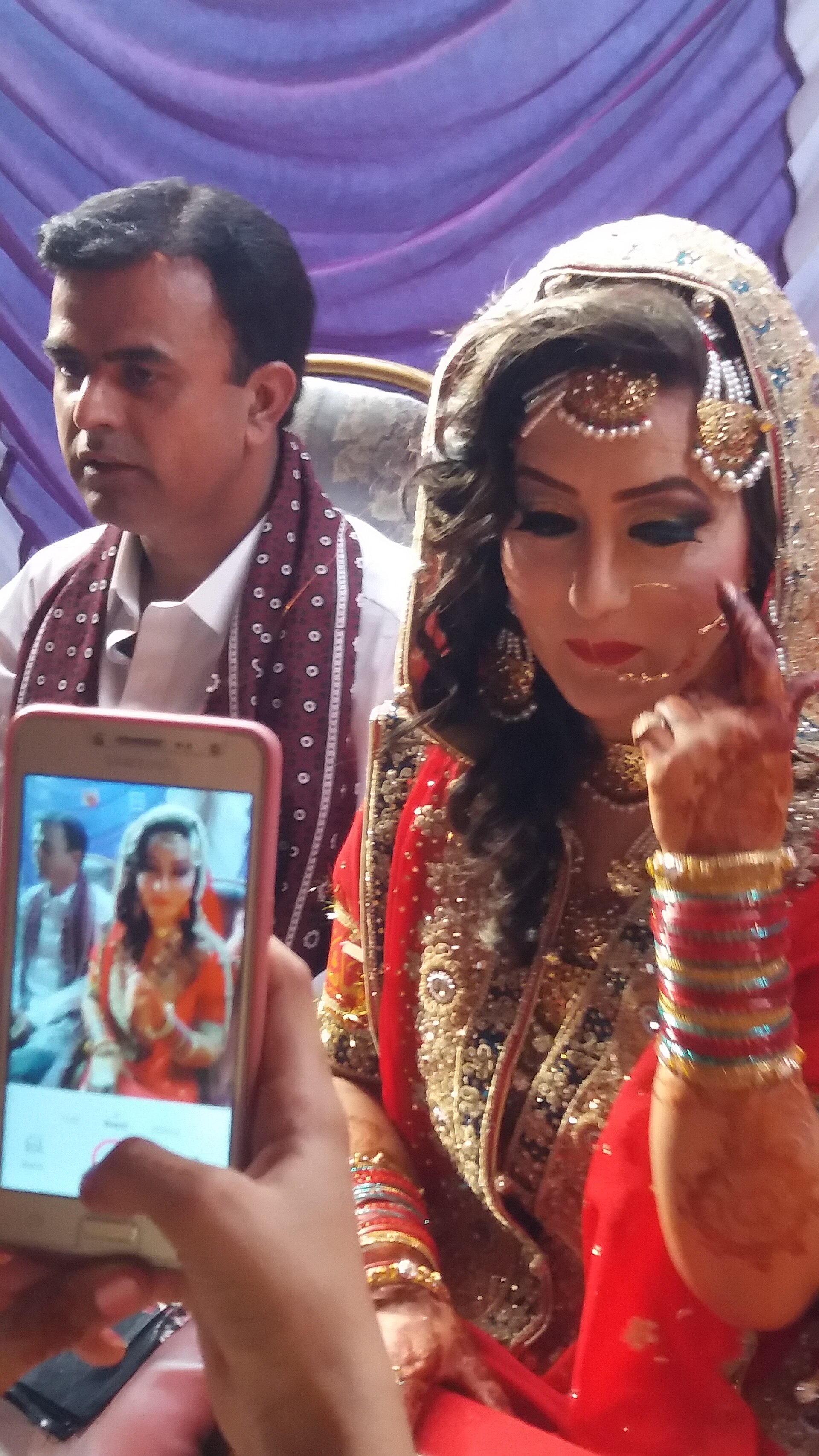
Pakistani wedding-dress alterations: the final six-week timeline
Zainab Noor · 13 Sep 2026 · 17 min
Bridal blouse fitting: neckline, sleeves, support and movement
Zainab Noor · 13 Sep 2026 · 15 min
Double dupatta bridal styling without doubling the discomfort
Zainab Noor · 13 Sep 2026 · 15 min
Nikah dupatta guide: coverage, pins, weight and photographs
Zainab Noor · 13 Sep 2026 · 16 min
Readers
The conversation
0 notes
Anyone can leave a note. Guests add a name and email — no account required, and the email is never published.
No notes yet. Yours would be the first.