Culture
Dholki at home: music, food, neighbours, and a sensible schedule
A warm, workable home dholki plan that protects music, neighbours, guest flow and the people doing the hosting.
By Bilal Ahmed
Culture editor
2 min read
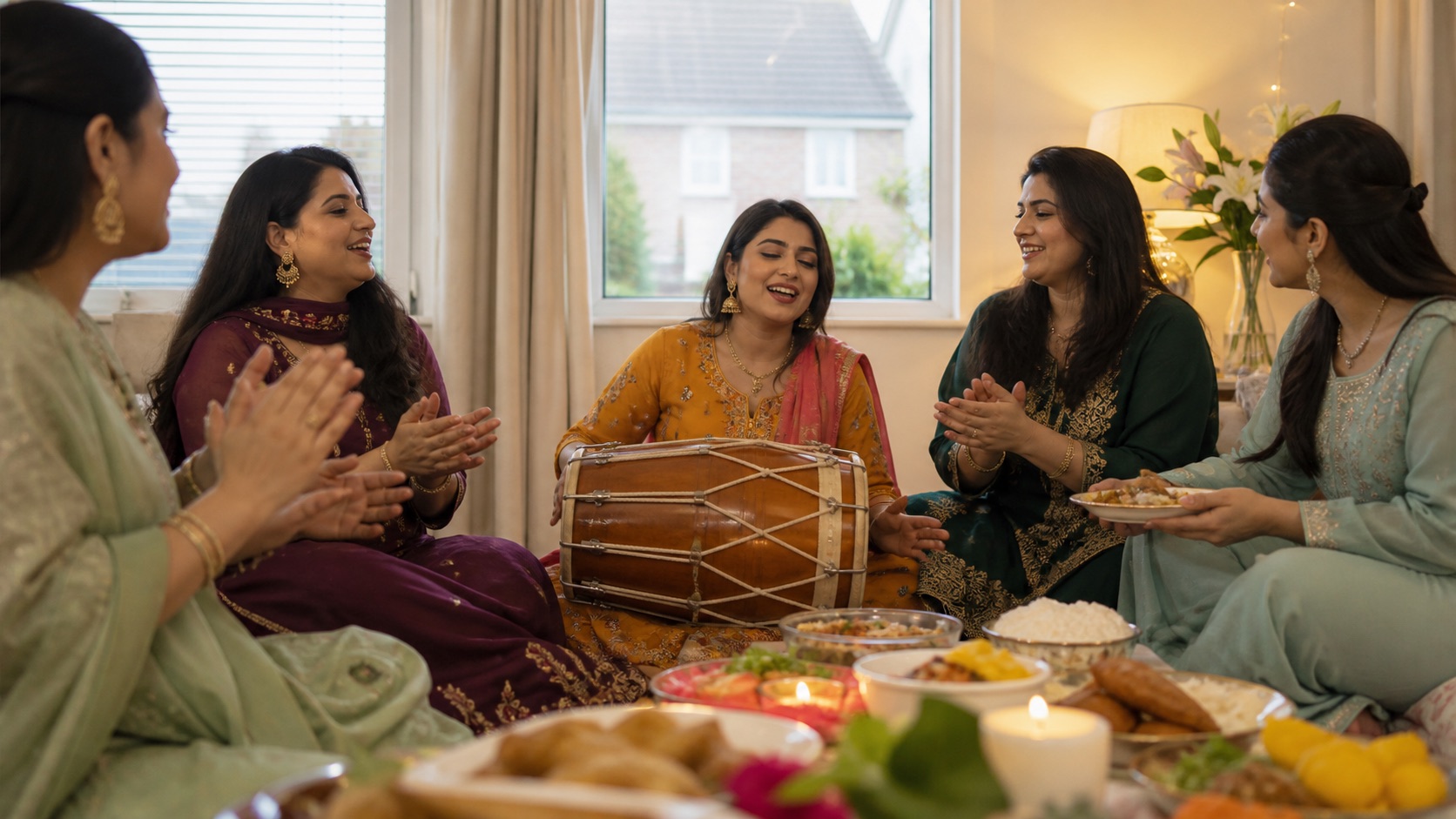
A dholki works when the room begins singing before anybody asks who is performing. It needs a small amount of structure—someone who knows the opening songs, lyrics people can see and a finish time—then enough looseness for an aunt to change the tempo or a child to take over the drum.
Arrange a circle, not an audience
Move the best seats towards the song leaders rather than building a stage at one end. Leave an accessible chair with arms, a route to the bathroom and space where children can join without crossing hot food. Test whether the dholki can be heard without speakers; amplification should support voices, not make neighbours experience the event through a wall.
Give the music an arc
- Open with familiar songs that need little explanation.
- Move to family favourites and regional material, crediting the person who teaches them.
- Use dance tracks after the singing has found confidence.
- End deliberately instead of waiting for exhaustion to empty the room.
| Before guests | During | After |
|---|---|---|
| Tell neighbours the finish time | Keep doors and exits clear | Lower sound when promised |
| Print or share lyrics | Rotate tea and food duty | Store instruments dry |
| Prepare floor and chair seating | Watch cables and children | Deal with food promptly |
Serve food that can wait: one savoury tray, one sweet, fruit or chaat assembled close to serving, and chai managed by a named person. Keep allergens clear. Do not ask the person leading every song to also refill every cup.
Record selectively and ask before livestreaming a private room. The memory worth protecting is participation, not proof that every minute appeared online.
Song stewardship matters too. Note who supplied a verse, which language or regional version is being sung and whether a lyric needs context for younger guests. Avoid turning somebody’s imperfect Urdu or Punjabi into a joke. A dholki is one of the rare wedding spaces where knowledge can move between generations without a lecture; make it safe to join late and sing softly.
Keep water beside the singers and give the drum a stable, dry resting place.
Filed under
Keep reading
Related stories
More from this desk, this beat, and the tags on this piece.
Pakistani wedding photography shot list that protects real moments
Bilal Ahmed · 27 Jul 2026 · 4 min

Pakistani baby names: how to research meaning and pronunciation
Bilal Ahmed · 25 Aug 2026 · 2 min
Recording grandparents’ stories: an ethical family oral-history guide
Bilal Ahmed · 13 Sep 2026 · 16 min
How diaspora families archive old photographs before they disappear
Bilal Ahmed · 13 Sep 2026 · 17 min
Readers
The conversation
0 notes
Anyone can leave a note. Guests add a name and email — no account required, and the email is never published.
No notes yet. Yours would be the first.