Heritage
How to choose Pakistani clothes for hot and humid summers
A heat-aware guide to Pakistani summer clothes that treats fabric, looseness, lining and sweat as one system.
By Mehreen Ali
Travel editor
2 min read
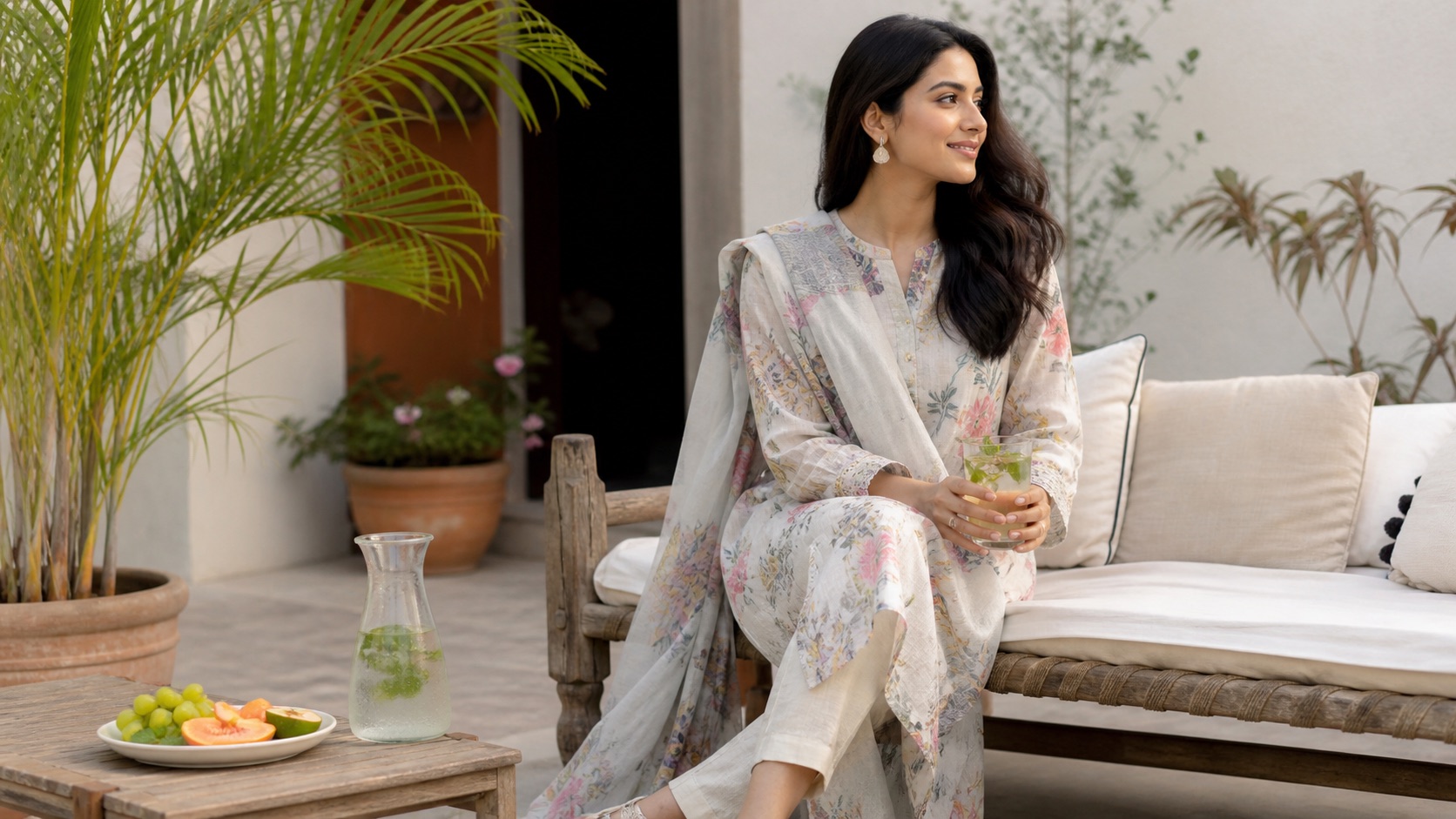
“Lawn” on a label does not guarantee a cool day. Comfort comes from the whole garment: fibre, weave, colour, cut, lining and how quickly damp fabric can move away from skin. A loose synthetic suit may trap more heat than a closer—but not tight—cotton one; a breathable kameez can become stifling beneath a full polyester lining.
Hold the cloth up before you hold it against yourself
Check the fibre label, then look through the fabric towards a window. A very open weave may breathe beautifully and require an underlayer. Rub a hidden area with a clean damp white cloth to investigate colour transfer. Crush a corner in your fist: if it remains deeply creased, decide whether that lived-in look suits the occasion and commute.
| Situation | Useful choice | Hidden cost |
|---|---|---|
| Humid commute | Washable cotton, side slits, room at armhole | A dark, dense print can absorb sun |
| Outdoor wedding | Light base with embroidery away from sweat zones | Heavy border and synthetic lining hold heat |
| Air-conditioned office | Breathable kurta plus removable layer | One heavy outfit cannot adapt |
Ease is ventilation you can see
Raise both arms and sit. The kameez should not seal against the underarm, pull across the back or trap at the hip below short side slits. Choose sleeves that permit air movement without entering food or machinery. Wide trousers feel cool only when their rise and waistband remain comfortable after several hours.
- Keep dense embroidery away from underarms and the small of the back.
- Choose an underlayer that adds opacity without sealing the body in polyester.
- Prefer prints or mid-tones when visible perspiration will make you self-conscious.
- Carry a clean cloth for blotting; rubbing salt marks damages colour and surface.
Wash a new everyday suit before an important wear if its care instructions allow, then measure shrinkage and inspect colour. In humid weather, clothes need enough wardrobe space to dry fully between wears. The coolest purchase is often the one that can be washed, dried and worn again without becoming a maintenance project.
Filed under
Keep reading
Related stories
More from this desk, this beat, and the tags on this piece.
Derawar Fort and Cholistan: permissions, heat and distance
Mehreen Ali · 13 Sep 2026 · 16 min
Makli Necropolis visitor guide: heat, scale and conservation
Mehreen Ali · 13 Sep 2026 · 16 min
Readers
The conversation
0 notes
Anyone can leave a note. Guests add a name and email — no account required, and the email is never published.
No notes yet. Yours would be the first.