Recipes
Beef nihari at home: a patient cook’s complete guide
A sensory nihari method built around meat, bhunai, slow cooking and a clean final gravy.
By Hassan Raza
Food editor
2 min read
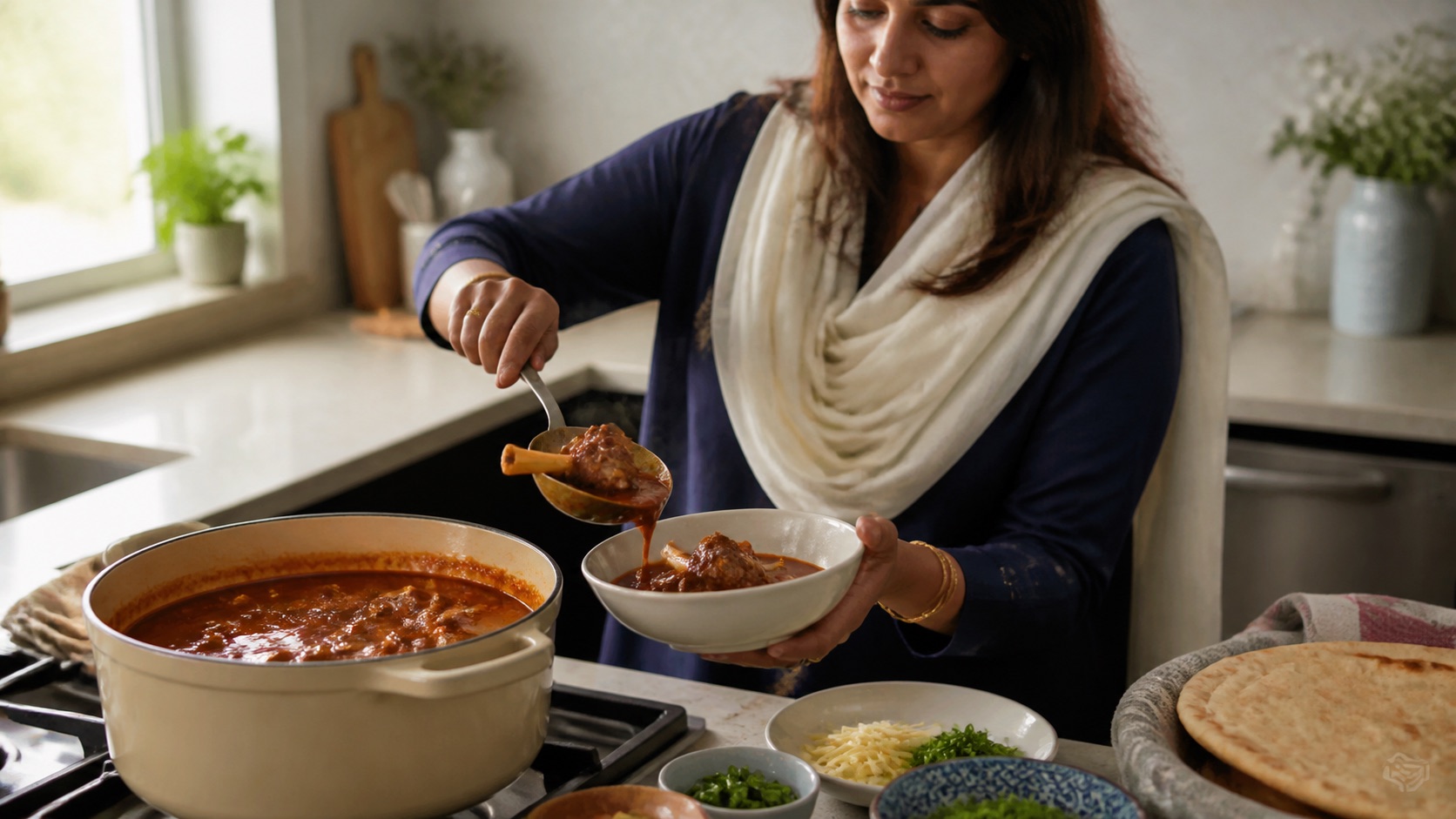
Nihari cannot be hurried into depth by adding more spice. Its character comes from beef, fat, roasted aromatics and time meeting in the same pot.
Choose collagen and enough room
Use shank or another slow-cooking cut with connective tissue; ask the butcher for pieces large enough to survive a long simmer. Brown onions and meat until the raw aroma has gone and the fat begins to separate. Toasted ground spices should smell rounded, never scorched.
Add hot water and cook gently until a spoon meets almost no resistance. Flour is a finishing tool, not the body of the stew: whisk atta or another recipe-specified thickener with cool water, then stream it into simmering liquid. Stop before the gravy looks finished; it thickens as it rests.
- Too thin: reduce uncovered before adding more slurry.
- Too thick: loosen with hot stock or water.
- Flat: check salt and acidity before adding spice powder.
- Harsh: the spices may need more cooking, not sugar.
Serve ginger, coriander, green chilli and lemon separately so freshness remains fresh. Nihari should coat naan yet still move in the bowl; it is a gravy, not paste.
Skim only after tasting. Some surface fat carries spice aroma and gives nihari its characteristic finish; removing every trace can make the broth seem oddly thin. Offer extra tari separately if your guests value it. Warm bowls before serving so the gravy does not congeal on contact.
Scale the pot by surface and time
Doubling ingredients does not double evaporation. A crowded pot browns poorly and a deeper volume takes longer to cool safely. For a large gathering, cook in two manageable vessels or begin with a tested catering quantity. Keep garnish cold and separate until service. When reheating, stir from the bottom and check several places rather than trusting steam at the surface. Write down the cut, pan size, liquid and final timing when a batch succeeds; “cook until done” is difficult knowledge to pass on. Serve a smaller first portion because nihari is rich and guests can return.
Filed under
Keep reading
Related stories
More from this desk, this beat, and the tags on this piece.
Pakistani freezer cooking: 12 components that save a weeknight
Hassan Raza · 18 Jul 2026 · 2 min
How to host a Pakistani dinner for guests new to the cuisine
Hassan Raza · 20 Jul 2026 · 2 min
Palak gosht: keeping spinach bright enough and meat tender
Hassan Raza · 13 Sep 2026 · 15 min
Pakistani chicken patties with crisp pastry and a dry filling
Hassan Raza · 13 Sep 2026 · 14 min
Readers
The conversation
0 notes
Anyone can leave a note. Guests add a name and email — no account required, and the email is never published.
No notes yet. Yours would be the first.