Chicken karahi at home: the tomato reduction is the recipe
A practical chicken karahi for home cooks, built around browning chicken, cooking tomatoes down properly and finishing with ginger, chilli and coriander rather than turning the pan into gravy.
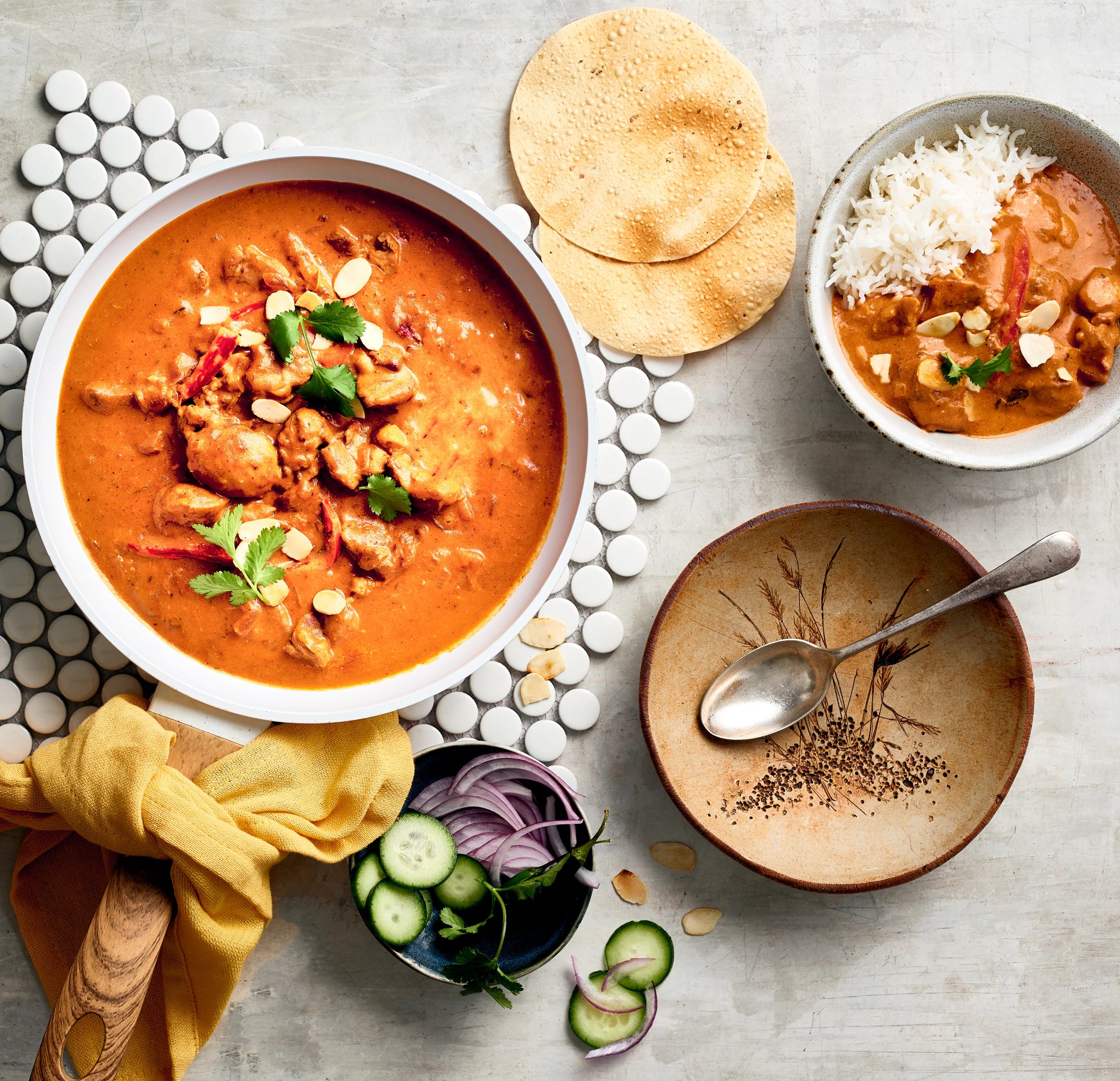
Chicken karahi becomes disappointing when it is treated like a generic curry: too much water, onions added out of habit, tomatoes still tasting raw, and a spoonful of every ground spice in the cupboard. A home version does not need restaurant flames, but it does need reduction. The tomato has to cook from chopped fruit into a glossy masala that clings to the chicken.
For four people
- 800g bone-in chicken pieces, skin removed if preferred
- 4 tbsp neutral oil
- 5 medium ripe tomatoes, roughly chopped
- 1 tbsp finely crushed garlic
- 1 tbsp finely crushed ginger, plus extra cut into matchsticks
- 1 to 1½ tsp salt, to taste
- 1 tsp coarsely crushed black pepper
- 1 tsp crushed red chilli, adjusted to taste
- ½ tsp ground cumin
- ½ tsp garam masala
- 2 green chillies, slit
- a generous handful of coriander, chopped
You can use boneless thigh for a faster weeknight pan, but bone-in pieces give the sauce more time to develop while the chicken cooks.
1. Brown the chicken before the tomatoes arrive
Heat the oil in a wide karahi, wok or sauté pan. Add the chicken and salt, then cook over medium-high heat until the pieces lose their raw exterior and pick up light colour. Add the crushed garlic and ginger for the final minute so they become fragrant without scorching.
2. Add tomatoes and resist the urge to add water
Add the chopped tomatoes. Keep the pan lively, stirring and scraping as the tomatoes release their own liquid. Once they soften, press them against the side of the pan with a spoon. The mixture will first look wetter, then thicker.
This stage can take 15 to 25 minutes depending on the pan, tomatoes and heat. You are looking for a masala that no longer tastes like raw tomato and begins to look glossy around the edges. If the pan genuinely threatens to catch before the tomatoes break down, add water by the tablespoon, not by the mug.
3. Season late enough to taste what the tomato became
Add black pepper, crushed chilli and cumin once the sauce has reduced. Continue cooking until the chicken is fully done and the sauce coats the pieces rather than pooling beneath them. The Food Standards Agency advises cooking poultry all the way through; a clean thermometer can be used to verify a safe time-and-temperature combination, and the meat should be steaming hot with no pink flesh when cut at the thickest point.
4. Finish for freshness, not another layer of heaviness
Turn off the heat and add garam masala, green chilli, coriander and ginger matchsticks. Rest the pan for five minutes. The garnish should smell brighter than the cooked masala.
What went wrong?
It tastes sour: the tomatoes may need more cooking, or they may simply be sharp. Keep reducing before reaching for sugar. A small spoonful of yoghurt can soften an aggressively acidic batch, but it changes the style.
It is watery: remove the lid and reduce. Karahi does not improve because flour or cornflour made it thick.
The masala burns before the chicken cooks: your pan is too dry or the heat is too fierce. Add a small splash of hot water, lower the heat and continue.
It tastes flat: check salt first, then fresh ginger, chilli and coriander. More powdered spice is not always the missing thing.
Serve and store sensibly
Serve with naan or roti, sliced onion and lemon if you like it. Cool leftovers promptly and refrigerate them rather than leaving the karahi on the stove for the evening. When reheating, FSA guidance is to heat leftovers until steaming hot throughout and to reheat only once.
The point is not to reproduce one restaurant’s pan. It is to understand the sequence: chicken, tomato, reduction, seasoning, fresh finish. Once that order makes sense, the recipe becomes much harder to lose.
Choose the pan for evaporation, not for the photograph
A wide pan gives water somewhere to go. That matters because karahi flavour concentrates as tomato moisture evaporates and the meat cooks in the increasingly thick masala. A narrow saucepan can still work, but reduction takes longer and it is easier to end with chicken sitting in thin tomato gravy.
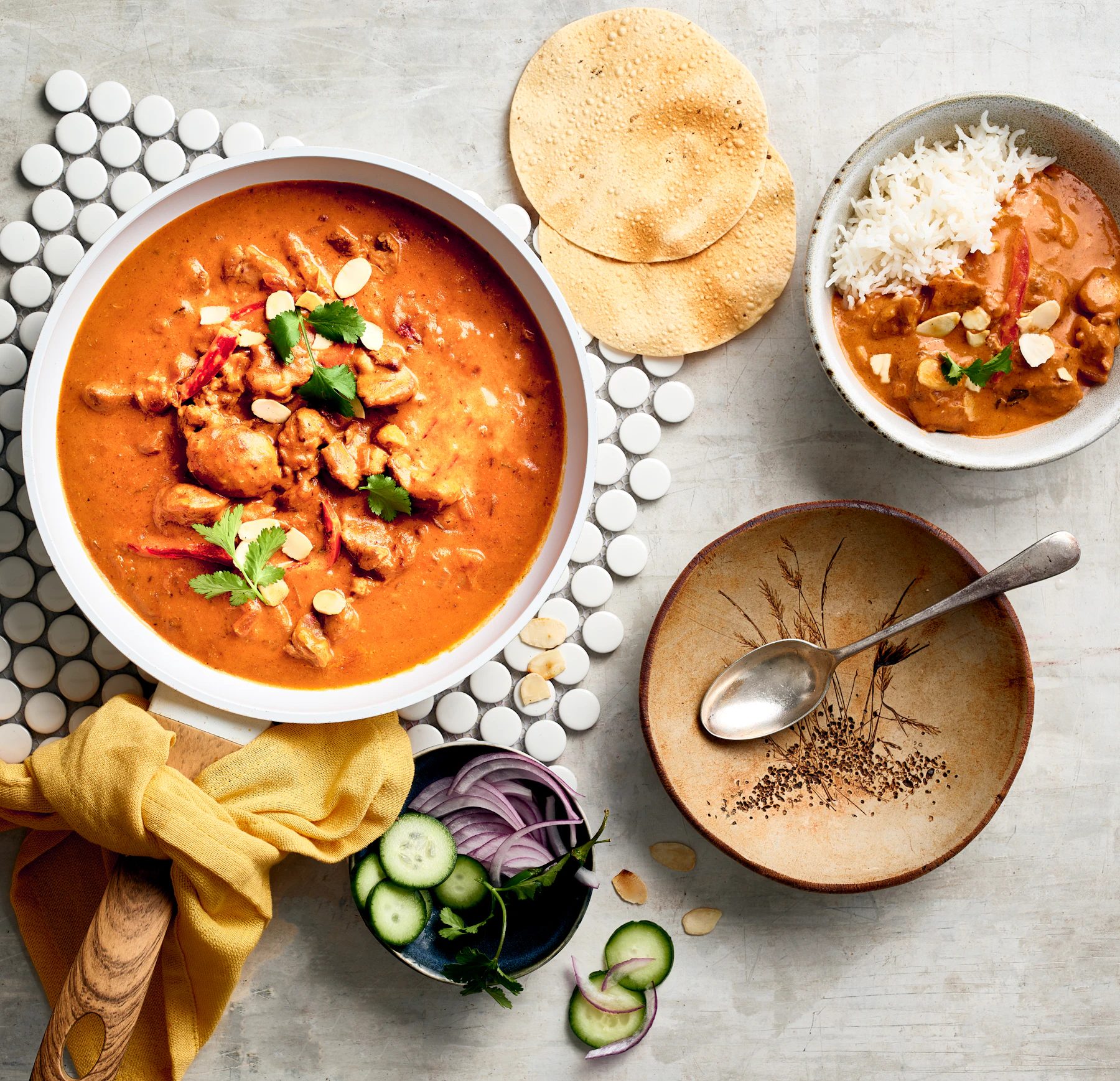
Use a heavy base if possible so the masala can cook hard without scorching instantly. A traditional rounded karahi gives great surface contact, but a wide sauté pan or wok is a perfectly sensible home substitute.
Bone-in and boneless need different timing
Small bone-in pieces are forgiving because they can cook while the tomatoes reduce. Boneless breast cooks quickly and can become dry before the sauce is ready. If using boneless meat, thigh is usually easier, or reduce the tomato base further before adding very small breast pieces.
Keep pieces similar in size. One huge leg piece and several tiny breast cubes cannot finish at the same time.
The tomato is an ingredient, not just liquid
Ripe fresh tomatoes give body and acidity. Winter tomatoes can be watery and pale; canned whole tomatoes can be a reasonable substitute when fresh produce is poor, though the flavour changes. Whichever you use, the important step is cooking until the raw, metallic tomato note disappears.
Salt helps tomatoes release liquid. High heat helps that liquid leave. Stir often enough to protect the base but not so constantly that the pan never gets hot.
Read the masala by sight and sound
Early in cooking, the pan sounds wet and bubbling. As water leaves, the sound becomes sharper and the oil begins to show around the edges. The masala darkens slightly and sticks more readily to the chicken. That is the stage at which spices taste integrated rather than dusted on.
If the tomato catches before softening, the heat is too high for your pan. Add a splash of hot water, scrape the base and continue. The goal is reduction, not burning.
Why onions change the dish
Many restaurant and home karahi traditions omit onion so the tomato, chicken, ginger and chilli remain direct. Adding onion creates sweetness and more gravy body. It can still be delicious, but it moves the pan towards a different curry structure.
If you prefer onion, use it intentionally rather than automatically. Cook it down before the tomato and expect a softer, sweeter sauce.
Fresh ginger has two jobs
Ginger cooked early becomes part of the base. Ginger cut into fine matchsticks at the end stays hot, floral and slightly crunchy. Using both creates depth without adding another spoonful of powdered spice.
The same principle applies to green chilli and coriander: long cooking softens their character; late addition keeps them bright.
How to scale the recipe for guests
Doubling ingredients in one pan can quietly destroy the method by doubling the water without doubling evaporation surface. For a large batch, use two wide pans or brown the chicken in batches, then combine once the tomatoes have already reduced.
Do not simply double salt and chilli blindly. Add most, taste near the end and adjust. Large batches concentrate unpredictably depending on evaporation.
Cooking chicken safely without drying it out
Poultry must be cooked through. The most reliable home method is a clean food thermometer used at the thickest part, following current food-safety guidance. Visual checks—steaming hot meat, no raw pink in the centre—are useful, but a thermometer removes guesswork with large bone-in pieces.
Once the chicken is cooked, stop simmering simply because dinner is not ready. Hold it gently on very low heat or reheat later rather than making tenderness pay for the timetable.
What to serve alongside it
Naan catches a reduced sauce well. Roti makes the meal lighter. A sharp onion salad, lemon and plain yoghurt can cut richness without competing with the pan. Rice works, but a very dry karahi may need a little more sauce if rice is the main starch.
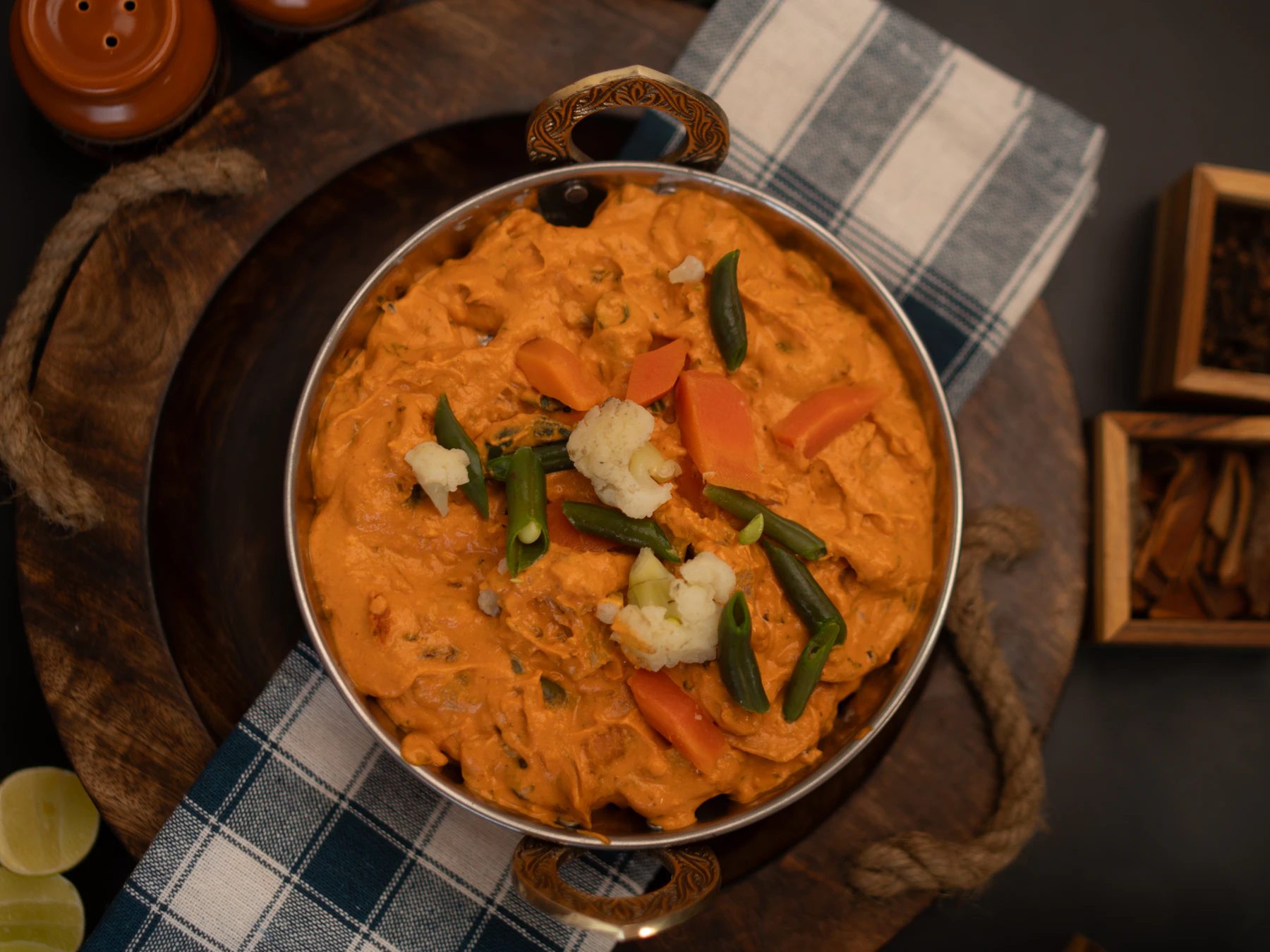
Leftovers are useful, but treat them as chicken leftovers
Cool them promptly, refrigerate and reheat only the amount you need until steaming hot throughout. Shred leftover karahi into a wrap, spoon it over a baked potato or add a little water and chickpeas for a different lunch.
The key idea remains simple: karahi is not thick because flour or cream was added. It becomes intense because water leaves. Learn to recognise that reduction and the recipe becomes much more transferable than any fixed list of spice teaspoons.
Heat management is an ingredient: Chicken karahi at home
For Pakistani chicken karahi recipe in particular, A high flame is useful for browning and evaporation; low heat is useful for tenderness and gentle finishing. Many disappointing Pakistani dishes come from leaving the burner at one setting for the entire recipe. Move deliberately between high, medium and low heat based on the job being done.
With Pakistani chicken karahi recipe as the focus, If a masala catches, lower the heat and add a small amount of hot water rather than pouring in enough liquid to erase the concentration you built. If food is pale and steaming instead of browning, the pan may be overcrowded or too cool. The sound of the pan is often as useful as the clock.
Scaling for guests needs more than multiplication: Chicken karahi at home
Doubling Pakistani chicken karahi recipe can double water and food mass without doubling evaporation surface or burner power. That is why a recipe that works for four can become watery for twelve. Use two pans, work in batches or allow extra reduction time when the cooking method depends on browning or evaporation.
In practical terms for Pakistani chicken karahi recipe, Salt, chilli and strong whole spices should usually be increased more cautiously than the main ingredient. Add most of the calculated amount, taste when safe, then finish. A large batch is expensive to rescue after seasoning has overshot.
Make-ahead work should protect the final texture: Chicken karahi at home
Decide which stage improves after resting and which part should stay fresh. Slow meat bases, daal and some curries often reheat well; fried coatings, fresh herbs, crisp toppings and delicate breads generally do not. For Pakistani chicken karahi recipe, stop at the stage that preserves the part diners care about most.
Applied specifically to Pakistani chicken karahi recipe, Cool cooked food promptly in smaller containers rather than leaving a large hot pot at room temperature. Label freezer containers with the dish and date. A freezer full of unlabelled brown curries is not meal preparation; it is a guessing game.
Storage and reheating deserve the same care as cooking: Chicken karahi at home
For a reader working through Pakistani chicken karahi recipe, Food safety does not become less important because the recipe is traditional. Refrigerate leftovers promptly, keep raw and cooked food separate, and reheat according to current food-safety guidance. Rice and poultry deserve particular attention because poor cooling or incomplete reheating can create risks that are invisible to taste.
For Pakistani chicken karahi recipe in particular, Reheat only the amount you need where possible. Add fresh water, stock or garnish after reheating if the dish has thickened in the fridge. The goal is to restore texture without repeatedly cycling the whole pot through warm temperatures.
Build the plate around contrast: Chicken karahi at home
With chicken karahi at home as the focus, A rich or slow-cooked dish benefits from something fresh, acidic or crisp; a dry grilled dish may need yoghurt, chutney or a juicy salad. Think about the main dish before adding sides. Hospitality does not require five starches and three fried items beside a recipe that was already complete.
For family meals, put chilli, lemon, chutney and raw onion on the table rather than forcing every diner into the same heat level. That gives children, older relatives and people with different tolerances a way to adjust the plate without changing the core recipe.
Troubleshoot the process, not your ability: Chicken karahi at home
If chicken karahi at home is watery, ask where excess water entered and whether it had enough surface area to leave. If it is tough, ask whether the ingredient needed longer gentle cooking. If it is greasy, consider the fat content of the meat and whether free oil could be removed. Specific questions produce specific fixes.
Keep notes for the next attempt: pan size, brand of rice or flour, approximate cooking time and the one adjustment you would make. Home cooking becomes reliable through small recorded corrections, not through deciding you are either “good” or “bad” at a dish.
Respect regional and family variation: Chicken karahi at home
Pakistani recipes move between cities, languages, migration routes and individual kitchens. A family in Karachi may finish the same named dish differently from a family in Peshawar or Birmingham. Treat those differences as evidence of a living cuisine rather than a contest that requires one winner.
The useful test is whether your method is honest about what it is and produces the texture and flavour you intended. Learn the classic structure first, then adapt with enough understanding that the change is a choice rather than an accident.
How to plan this dish before the heat goes on: Chicken karahi at home
preparation is part of the cooking. Read the method once, identify the ingredient that takes longest, and decide which components can be measured, chopped or cooled before the pan becomes busy. Pakistani home cooking often feels intuitive because experienced cooks have already internalised that sequence; writing it down makes the same intuition available to a newer cook.
With chicken karahi at home as the focus, Keep raw meat, cooked food and ready-to-eat garnishes separate while you work. Put spices into a small bowl in the order they will be used, prepare a clean spoon for tasting after meat is cooked, and clear enough bench space that you are not balancing hot pans around packets. Good mise en place is not restaurant theatre; it prevents the stage where garlic burns because the tomatoes are still being chopped.
Use sensory cues instead of treating minutes as law: Chicken karahi at home
Recipes give times because readers need a starting point, but pans, burners, meat cuts, vegetable water content and altitude all change the clock. Learn the cues in chicken karahi at home: whether the onion is actually golden, whether the masala has lost its raw smell, whether water has evaporated, whether rice grains are almost tender, or whether a batter has the right thickness.
Write down what you saw when a batch worked. “Tomatoes reduced until the spoon briefly exposed the pan” is a better future instruction than “cook 12 minutes” if your next hob is stronger. Sensory cooking makes a recipe portable between a British induction hob, a Pakistani gas flame and a family kitchen with a completely different pan.
Ingredient quality matters most where the recipe is simple: Chicken karahi at home
When a dish uses relatively few ingredients, substitutions are more visible. Old ground spices can taste dusty, watery tomatoes can extend reduction dramatically, and rice from a different brand may need a different liquid ratio. Buy the best version that is practical, but do not confuse expensive with suitable.
If an ingredient is unfamiliar or difficult to find, change one thing at a time and record it. Replacing three spices, the main protein and the cooking fat at once may still make dinner, but it no longer teaches you how the original balance of chicken karahi at home works.
Sources and official profiles
Filed under
Was this helpful?
Keep reading
Related stories
More from this desk, this beat, and the tags on this piece.
Readers
The conversation
0 notes
Anyone can leave a note. Guests add a name and email — no account required, and the email is never published.
No notes yet. Yours would be the first.