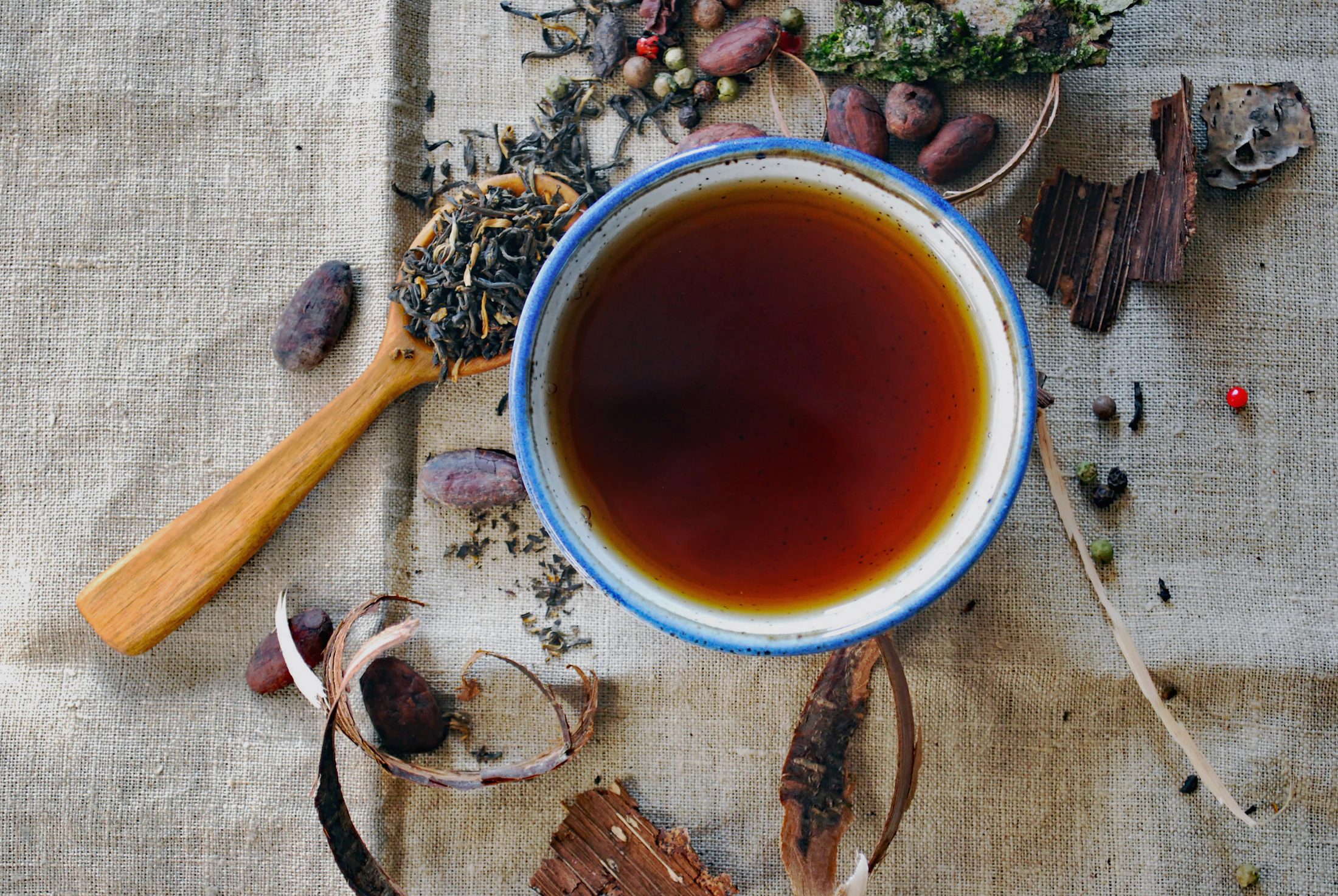
Chai after dinner: when the cup you love starts arguing with sleep
You do not have to give up evening chai to take sleep seriously. Start by noticing timing, strength and habit, then move the cup earlier or make the late one gentler.

For many Pakistani homes, “no more caffeine” is an oddly unrealistic piece of sleep advice because chai is not just a stimulant delivery system. It closes dinner, gives a guest a reason to stay ten more minutes, and creates a small pause after everybody has finished talking over one another. The better question is not whether chai is good or bad. It is whether your late cup is keeping you awake.
Tea contains caffeine even when it does not feel like coffee
Black tea naturally contains caffeine. The amount in a cup varies with tea type, quantity, brewing time and how the drink is made. A large, strong doodh patti simmered with plenty of tea can therefore feel different from a lightly brewed cup.
The NHS advises people struggling with sleep to avoid tea and coffee for at least six hours before bedtime. That is a practical starting point rather than a moral rule. People vary in how strongly they respond to caffeine, and the same person can notice it more on some days than others.
Run a one-week experiment before blaming your whole routine
If you usually drink chai at 9.30pm and lie awake at midnight, move that cup to after lunch or early evening for a week. Keep the rest of your bedtime roughly similar. Notice how long you take to fall asleep, whether you wake during the night, and how you feel the next morning.
You do not need a sleep tracker to do this. A note that says “tea 5pm; bed 11pm; slept easily” is enough to spot a pattern. If nothing changes, caffeine may not be the main reason you are awake.
If the ritual matters, keep the ritual and alter the tea
A smaller cup, weaker brew or decaffeinated black tea can preserve much of the familiar sequence. Some families switch the late round to warm milk or a caffeine-free herbal drink. Be careful with the idea that every “natural” tea is automatically suitable for everyone; herbal products can interact with medicines and may not be appropriate during pregnancy or for some health conditions.
Watch the hidden second cup
Evening caffeine often accumulates socially: one tea at work, one after dinner, another because guests arrived. None feels remarkable on its own. If sleep is difficult, count the day rather than only the final cup. Cola, energy drinks, chocolate and some medicines can contribute caffeine too.
Do not turn a bad night into a punishment
If you sleep poorly, the NHS advises returning to regular sleeping hours rather than sleeping in to compensate. A calm wind-down, a dark room and less screen stimulation can matter alongside caffeine timing. Persistent insomnia deserves proper attention, particularly when it affects mood, concentration, driving or daily functioning.
If sleep trouble lasts for months or is making daily life hard to cope with, speak to a GP rather than endlessly editing your tea. Snoring, breathing pauses, restless legs, pain, anxiety and other conditions can all disrupt sleep and need different answers.
The kind version of the rule
You do not need to prove discipline by giving up something that carries comfort and hospitality. Try moving it earlier. Try making it lighter. Notice what your own sleep does. A cup shared at the right time can stay part of the evening without being the final argument your brain has before bed.
Start from your current baseline: Chai after dinner
With chai caffeine sleep as the focus, A person already running five days a week and a person returning to movement after years of inactivity need different versions of the same advice. Build from what you can currently do comfortably rather than from an online ideal.
Increase duration or intensity gradually. Sudden large changes create soreness, fatigue and a higher chance that the routine disappears after a week.
Environment changes the workload
Heat, humidity, air pollution, altitude, fasting and poor sleep can all make a familiar session feel harder. Adjust pace, duration or location instead of assuming the body should perform identically in every condition.
Use current weather and air-quality information when the environment is part of the risk. Moving indoors or shortening a session can preserve the habit without forcing unnecessary exposure.

Hydration and food should support the plan: Chai after dinner
In practical terms for chai caffeine sleep, For ordinary activity, regular meals and water are usually the foundation. Longer, hotter or more demanding exercise may need more deliberate fluid and electrolyte planning. During Ramadan, all hydration has to fit into non-fasting hours.
Do not copy a supplement routine simply because the activity looks similar. Medical conditions, medicines and total diet change what is appropriate.
Sleep belongs in the programme: Chai after dinner
Applied specifically to chai caffeine sleep, Training gains and daily wellbeing are harder to support when sleep is repeatedly shortened. If a new routine requires waking much earlier or staying up later, account for the lost sleep rather than treating it as unrelated.
During Ramadan or shift work, the best schedule may be the one that protects total rest even if the workout time is less fashionable.
Use effort as well as numbers: Chai after dinner
For a reader working through chai caffeine sleep, Pace, heart rate, weight and step counts are useful measurements, but they need context. A walk in extreme heat or a run in poor air quality can demand more from the body at the same speed.
Know the red flags that end the session
Chest pain, fainting, severe breathlessness, confusion, collapse or symptoms of heatstroke are not signals to push through. Stop and seek appropriate medical help.
People with diabetes, cardiovascular disease, kidney disease, pregnancy or other significant conditions may need personalised advice on fasting, exercise, hydration and meal timing.

Keep the claim smaller than the habit: Chai after dinner
The most trustworthy version of chai caffeine sleep is specific about what it can and cannot do. Movement, sleep, food and hydration support health, but none is a substitute for diagnosis, prescribed treatment or emergency care.
Define the smallest useful goal: Chai after dinner
For chai caffeine sleep, decide what you are actually trying to improve: consistency, energy, strength, sleep, hydration, mobility, glucose control, heat tolerance or simply the amount of time spent sitting. A narrow goal makes it easier to choose an action that matches it.
For chai caffeine sleep in particular, Avoid turning one habit into a promise about every health outcome. A short walk can be useful without being a weight-loss guarantee; a balanced suhoor can support a fasting day without becoming a perfect nutrition plan.
Questions to resolve before acting on Chai after dinner
With chai caffeine sleep as the focus, What is personal? Body measurements, health conditions, family expectations, budget, climate and skill level can change the best choice. Use the article as a framework rather than forcing your circumstances into somebody else's exact answer.
How to use the Chai after dinner information
Save the small number of details that would be annoying to reconstruct later: measurements, booking references, successful ingredient ratios, product names, alteration notes or family decisions. A short record turns the next purchase, trip, meal or event from a fresh problem into an iteration.
Finally, prefer a reversible experiment when one is available. Test one skincare product, cook a half batch, pin the dupatta at home, make a small transfer, walk a shorter route or ask the host one clear question. Low-cost tests produce better information than making a large commitment because the first answer sounded confident.
Use a two-week reality check for chai after dinner
Track the behaviour rather than demanding an immediate outcome: how many sessions happened, how difficult they felt, whether sleep changed and whether the routine fitted around work and family. Two ordinary weeks tell you more about sustainability than one highly motivated weekend.
Decide what maintenance looks like: Chai after dinner
Once the routine feels normal, identify the minimum version you can keep during travel, Ramadan, illness recovery or a busy work period. That might be a shorter walk, fewer gym sets or a simplified meal pattern.
Maintenance protects continuity. Returning to the full version after a disrupted week is much easier when the habit never had to become zero.
A final test for Chai after dinner
With chai after dinner, the most useful comparison is your ordinary baseline rather than somebody else’s ideal routine. Change the timing, duration, food, fluid or intensity that the article discusses, then watch how the next few days actually feel. A small change that survives work, family life and sleep is more valuable than an aggressive plan that lasts one weekend.
health context can change the answer. Pregnancy, prescribed medicines, chronic conditions, previous fainting or heat illness, and significant symptoms deserve individual advice rather than a generic target from an article. Use chai caffeine sleep calmer and better informed, not to override a clinician who knows the person’s history.
Sources and official profiles
Filed under
Was this helpful?
Keep reading
Related stories
More from this desk, this beat, and the tags on this piece.




Readers
The conversation
0 notes
Anyone can leave a note. Guests add a name and email — no account required, and the email is never published.
No notes yet. Yours would be the first.