Hair
Hair oiling for South Asian hair: a practical evidence-aware guide
A scalp-aware hair-oiling routine that separates tradition, conditioning and comfort from unsupported growth promises.
By Nadia Shah
Beauty editor
2 min read
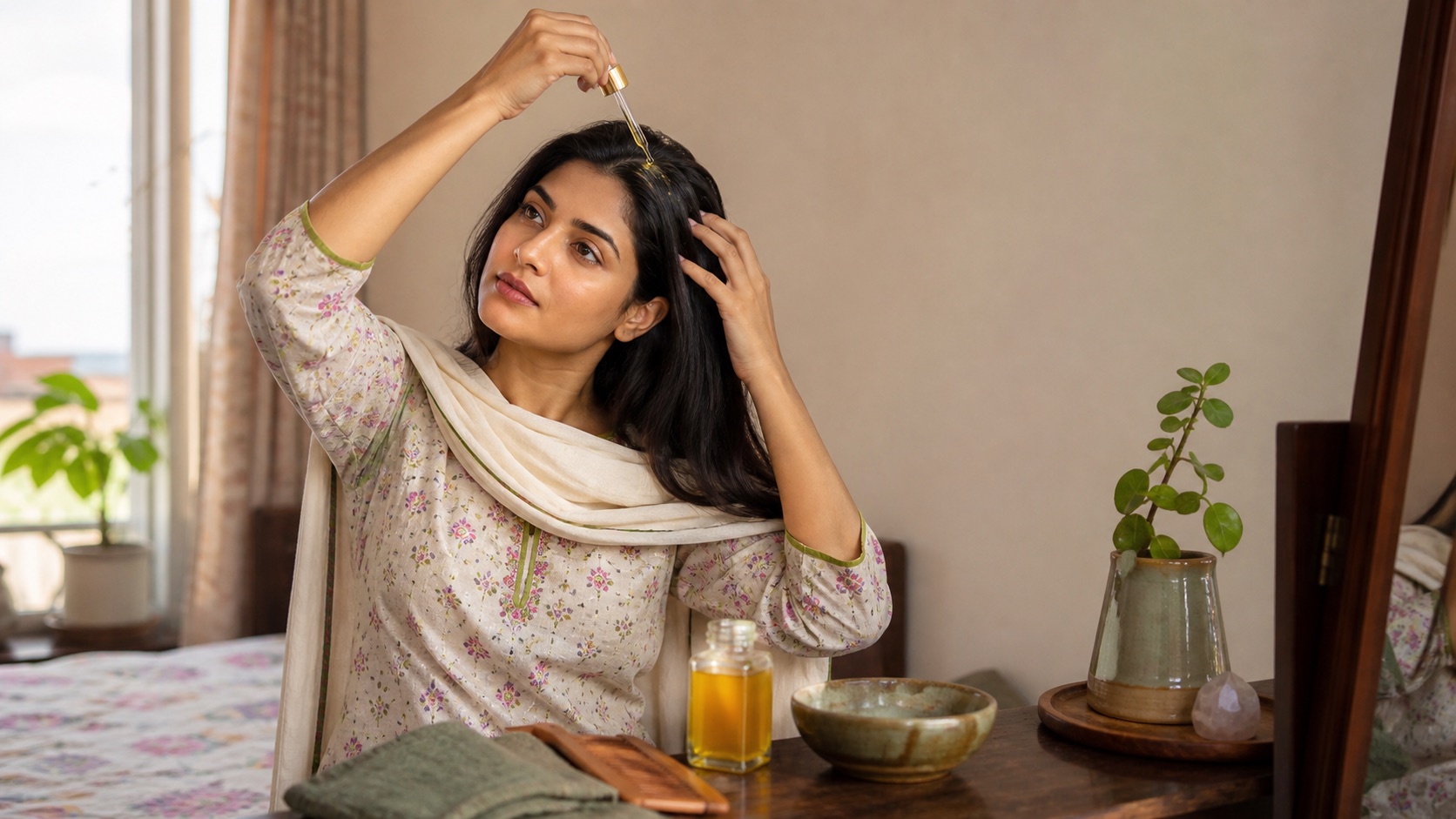
Hair oil can soften lengths, reduce friction during detangling and carry the memory of somebody parting hair on a Sunday afternoon. It is not a diagnosis or a guaranteed growth treatment. “South Asian hair” also describes millions of different scalps, curl patterns, strand widths and routines; ancestry does not choose the correct bottle.
Decide whether the scalp needs oil at all
An itchy, flaky scalp is not automatically dry. Dandruff, contact dermatitis, psoriasis and other conditions can look similar. The American Academy of Dermatology recommends appropriate dandruff shampoos and advises dermatology review when symptoms persist or become severe. Adding heavy oil may complicate a scalp already irritated or oily.
A small pre-wash trial
- Patch test the product and introduce only one new formula.
- Use a teaspoon-scale amount on dry lengths, concentrating on ends.
- If your healthy scalp tolerates oil, apply sparingly rather than saturating it.
- Leave it for a defined short period, then shampoo the scalp and condition the lengths.
- Record itch, bumps, shedding, softness and how many washes removal required.
| Result | Next decision |
|---|---|
| Softer ends, clean scalp | Repeat at the same amount |
| Hairline bumps | Stop contact with skin and wash pillowcases |
| Burning or rash | Stop the product; seek medical advice if persistent or severe |
| More flakes or itch | Do not mask it with more oil; investigate the scalp |
Protect clothing and bedding, avoid fragranced mixtures when sensitivity is a concern and keep hot oil comfortably warm, never heated enough to risk a burn. A good routine is the smallest amount that produces a useful result and still washes out without punishment.
Application technique matters as much as oil choice. Detangle gently before washing rather than tightening knots with vigorous massage. Keep oily hair away from the face if you develop hairline acne, and clean pillowcases, scarves and tools that collect residue. If removal requires repeated harsh shampooing, reduce the amount next time instead of adding another conditioning product to repair the wash.
Take a monthly photograph in the same light if growth is your concern. Daily mirror checks cannot separate breakage, shedding and ordinary variation.
Sources and official profiles
Keep reading
Related stories
More from this desk, this beat, and the tags on this piece.

Swimming and hair care: chlorine, salt water and post-swim washing
Nadia Shah · 13 Sep 2026 · 15 min
Readers
The conversation
0 notes
Anyone can leave a note. Guests add a name and email — no account required, and the email is never published.
No notes yet. Yours would be the first.