Street style
The Karachi evening edit
After five, Clifton and Zamzama change clothes. Four evenings on the sea wall and the fashion-adjacent edge of Burns Road showed what Karachi actually wears when the heat breaks.
By Ayesha Khan
Editor-in-chief
6 min read
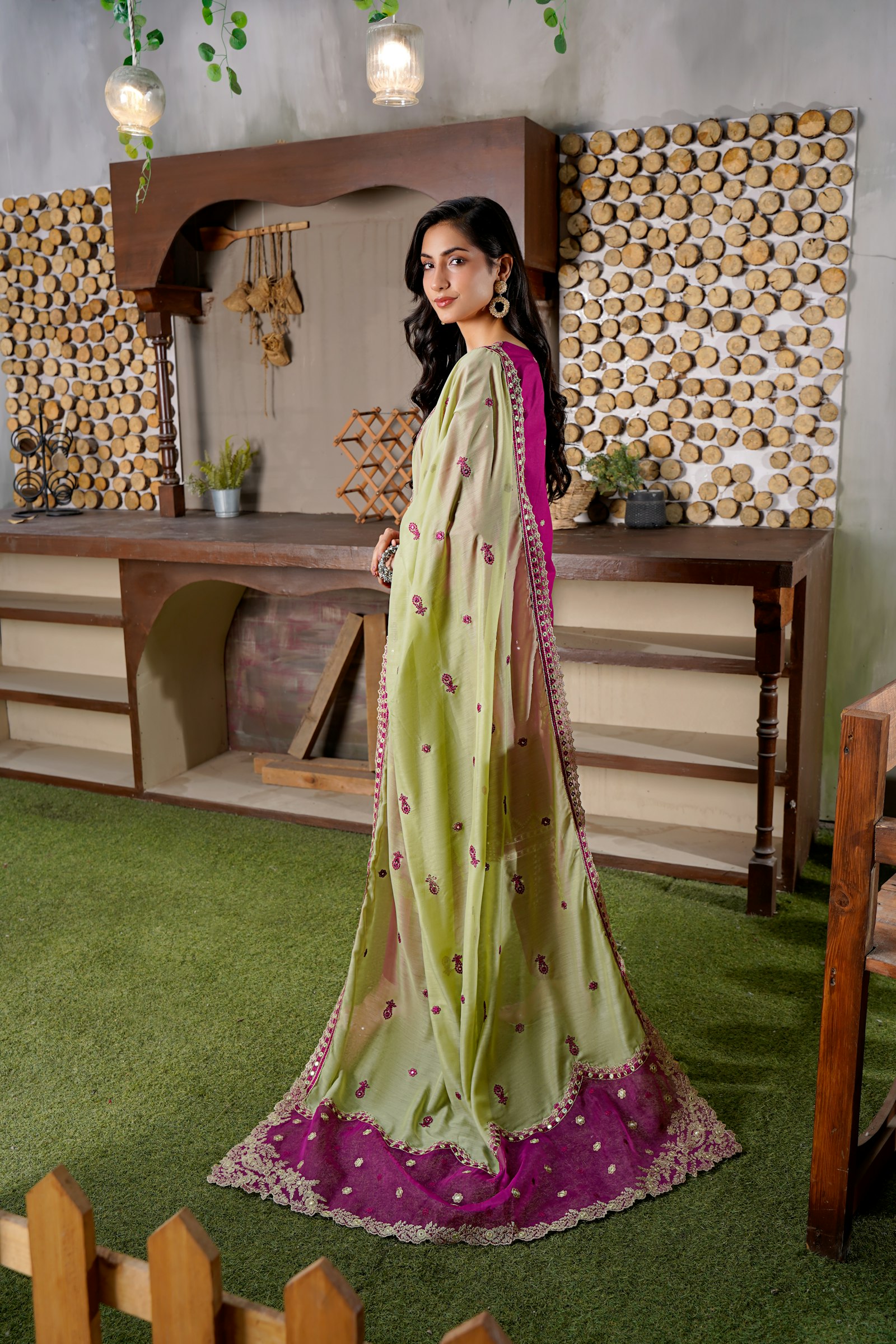
Karachi does not dress for noon. Between two and five the city is a negotiation with humidity: collars open, lawn shirts stuck to motorbike seats, dupattas used as shade more than as style. The clothes that matter arrive after the sun drops behind the sea wall at Clifton, when Zamzama starts to fill and the air finally moves. We spent four evenings walking from the Boat Basin lots to the stretch past the old Burns Road sweet shops — not to eat, to watch what people put on when they intend to be seen. This is the evening edit: a census, not a lookbook, of a city that changes clothes with the light.
I keep one outfit that can do dinner in Defence, a stop at a shrine, and forty minutes on Shahrah-e-Faisal. That is the brief, not a moodboard.
— Hira Qureshi, stylist, Karachi
What the sidewalks are wearing
On a Thursday in Clifton, the repeating pieces were not logos. They were fabric weight and proportion: wide-leg shalwar in sand cotton, a cropped denim jacket over a printed kurti, gold hoops that caught the sodium lamps outside a juice press. Men wore unstructured blazers with sneakers from a dawn gym. A woman in a black kurta stood on a motorbike footpeg as if the city had designed the outfit around that gesture.
The PakStyles desk photographed forty-two people between six and eleven. Twenty-four were in fusion of the weekday kind: a kurta over jeans, a waistcoat over a T-shirt that had earned its holes. The rest split between full traditional and a city uniform of black trousers and a white shirt that still looked expensive after humidity. Three people wore lawn as if it were still lawn season in this Karachi heat.
Humidity, bikes, and the laundry test
Designers talk silhouette. Karachi talks overnight laundry and the pillion seat. Anything that cannot be washed before Fajr or sat on a bike for forty minutes does not survive the week. That is why the evening edit favours breathable cotton, a shawl that becomes a wrap in a cinema, and shoes you can walk in when the ride drops you two streets early. Synthetic shine looks expensive at noon and cheap by maghrib.
We asked eight people how they chose the night’s outfit. Six mentioned the bike or the ride. One mentioned a photograph. One mentioned a mother. That ratio should embarrass every rooftop campaign with a fan just out of frame. A man in DHA keeps the blazer on a hanger at the office and changes shoes in the car. A woman in khussa, resoled in Saddar, looked more current than the billboards.
The Clifton-to-Zamzama walk
Start at the sea wall after maghrib. You will see walkers in trainers and kurtas, teenagers in oversized shirts, and men in waistcoats who have come from offices in Clifton and not yet gone home. The light is unkind and useful. It shows whether a white shirt is actually opaque, and whether embroidery was meant for a mehndi or for a Thursday. Keep walking toward Zamzama and the clothes get slightly louder, then settle.
Zamzama after nine is a corridor of air-conditioning leaking onto the pavement. People stand in the leak. That is where you see the jacket problem: too many blazers cut for a European winter, too few cut for a Karachi night that is still thirty degrees. The ones that work are unlined, linen-blend, or a well-cut waistcoat. A jewellery stall near a parking barrier sold small hoops and a chain you can keep on at the sink. That is the evening jewellery brief.
What men borrowed from the wedding circuit
The sherwani stays for the walima. What leaked into Thursday night is the cleaner shoulder, the higher collar worn open, and the refusal of shiny fabric that photographs like a swimming pool. We saw embroidered collars on otherwise plain kurtas, and trousers that finally broke at the shoe instead of pooling around a trainer. Khussa appeared on men who were not going to a function. They had been resoled, more than once.
A cutter in Defence, who asked not to be named because his grooms still think he only does weddings, said the weekday brief has become half his diary. Men want a waistcoat over a white shirt for a dinner that is not a shaadi, and trousers that work with sneakers. He is taking the waist in by two centimetres and dropping the shoulder. The wedding circuit taught the city structure. The street wants that structure without the noise.
The 2026 rules, written by traffic
If your evening depends on a car-to-door drop, you are dressing for a different Karachi than the one most people inhabit. The outfits we clocked had to climb off a bike, survive a hug at the gate, and still look composed under strip lighting. That is a technical problem. Pockets matter. A dupatta that can be knotted matters. A shoe that can take broken pavement matters. Fashion week will not put those sentences on a moodboard.
Colour in this heat is a logistics choice. Black hides sweat and shows dust. White shows everything and still wins after dark if the cloth is heavy enough. Sand, olive, and a faded indigo denim kept repeating because they forgive the day. Loud print is for lawn season and for people who have a driver waiting. We are reporting who is actually on the street at 8pm, and what their clothes have to do.
- One structured piece — jacket, waistcoat, or embroidered collar — against simple bottoms.
- Jewellery that survives a hug, a metal detector, and a motorbike pillion.
- A bag that holds a charger, a dupatta, and a samosa without looking like a conference tote.
What to stop copying from the feed
The feed loves a rooftop, a vintage car, and a jacket that has never sat on a bike. Copy that and you will be overdressed for the city you live in and underdressed for the heat. The evening edit is not anti-effort. It is anti-costume. Effort here looks like a pressed collar, a hem that does not drag through monsoon water, and fabric that still has a face after humidity.
We will keep walking this census. Not because Karachi lacks designers — it does not — but because the sidewalk is a more honest showroom than a ballroom with rented lights. If a piece cannot survive the hours between maghrib and midnight, it is not the season. It is content. The city already has enough content. It needs clothes that can do the night, on a bike, in this humidity, without a handler.
- If it cannot be washed overnight, it does not live in this wardrobe.
- Hem what drags through water on Shahrah-e-Faisal. Romance is not a flooded cuff.
- Keep a shawl that doubles as a wrap in aggressive air-conditioning.
If you are dressing for the feed, you will miss the city. If you are dressing for the hours between maghrib and midnight, you already know the edit: cotton, a structure, a shoe that can walk, and no apology for the bike. We will keep walking it, because the sidewalk is still the most honest showroom Karachi has.
Filed under
Keep reading
Related stories
More from this desk, this beat, and the tags on this piece.
Pakistani university style: practical modest outfits for long campus days
Zainab Noor · 13 Sep 2026 · 16 min
Islamabad office-to-dinner outfits without carrying a second wardrobe
Zainab Noor · 13 Sep 2026 · 15 min
Karachi monsoon dressing: clothes that survive humidity and sudden rain
Zainab Noor · 13 Sep 2026 · 16 min
Readers
The conversation
0 notes
Anyone can leave a note. Guests add a name and email — no account required, and the email is never published.
No notes yet. Yours would be the first.