Hosting chai for mixed UK guests without a buffet collapse
How to host chai for mixed British guests in a flat kitchen: one primary tea method, batch sizes, savoury-sweet balance, allergen labels, and a sequence that keeps the host in the room.

A British Pakistani chai evening collapses when the kettle, the frying pan, and the front door all demand you at once. Mixed UK guests (some raised on doodh patti, some on builder’s tea, some who “don’t really do milk tea”) do not need a buffet theatre. They need a drink that arrives hot, a plate that does not require a second kitchen, and a host who is still in the room.
Treat this as a hosting plan for a flat, not a catering pitch. Food-hygiene notes below follow UK public guidance checked around September 2026. They are not a menu of invented recipes.
- Decide the guest count in cups, not vibes. Count adults who will drink tea, then add a spare two cups. Children who want warm milk are a separate list.
- Choose one primary method. Either a pot of doodh patti on the hob or a kettle-and-bag station with milk warmed separately. Running both as equal main events is how the sink fills with pans.
- Lock the food to two savoury items and one sweet. More variety usually means more reheating collisions, not more hospitality.
- Stage the flat: cups near the pour, spoons with sugar, napkins where crumbs fall, coats away from the stove corridor.
Batch the tea so the conversation can continue
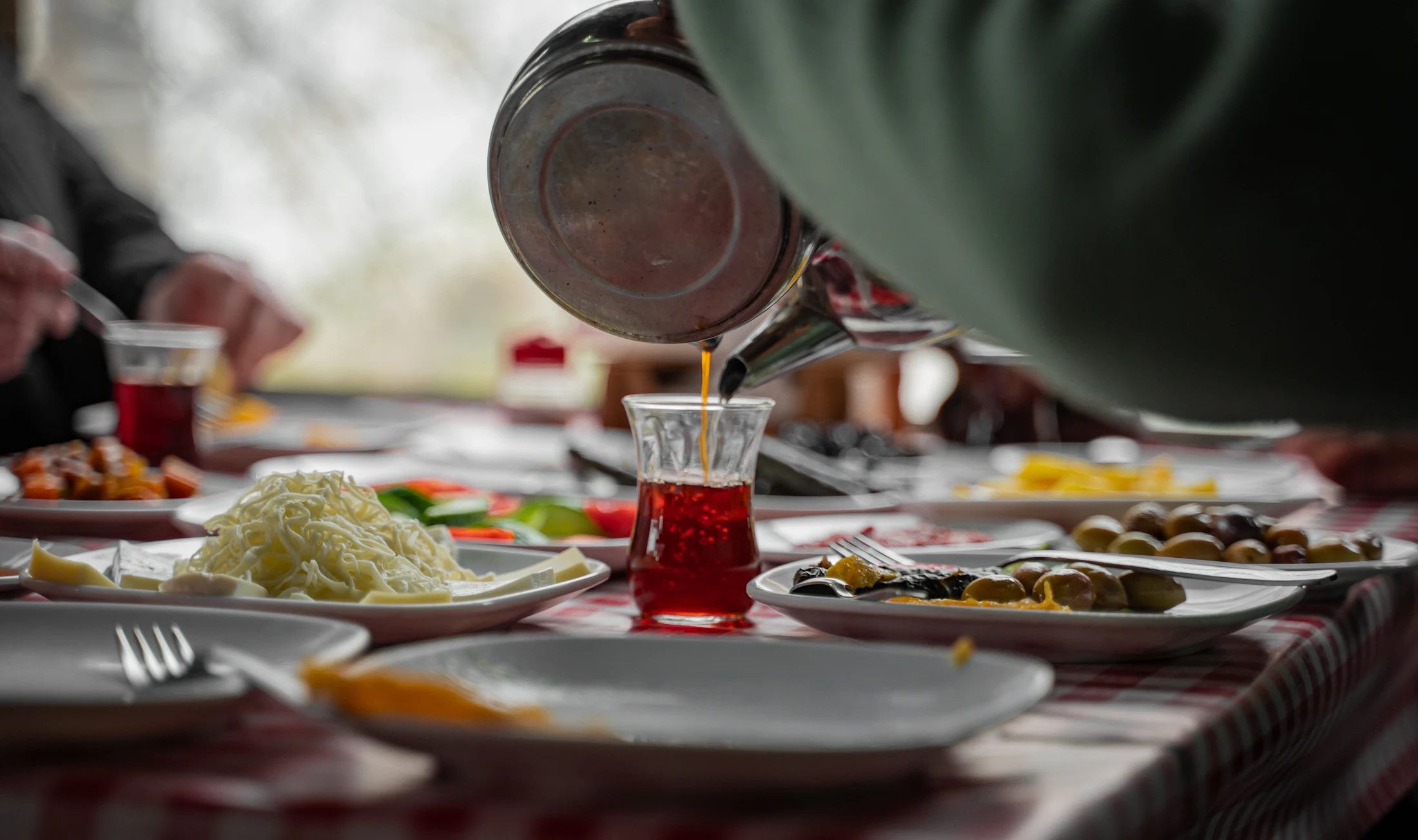
For doodh patti, batch by the pot you can actually lift and pour without scalding your wrist. In a small UK kitchen, two controlled pots beat one heroic vessel that cannot be stirred properly. Keep sugar optional at the cup. Mixed guests often disagree about sweetness more than about tea itself. If someone wants it strong and someone wants it mild, pour early for the strong drinkers and top the pot with hot water for the rest rather than brewing a second philosophy.
Tea bags are not a betrayal. For guests who flinch at cardamom or who only drink black tea with a splash of milk, a kettle station with clearly labelled options prevents the host from becoming a translator at the stove. Offer doodh patti as the house pour and bags as the dignified alternative. Put biscuits or rusk beside both so neither group feels parked in a corner of apology.
If someone does not drink caffeine, have a clear alternative ready (decaf bag, warm milk, or water) rather than improvising while the pot boils over. Ask dietary limits when you invite people, not when the tray is already in the room.
Balance savoury against sweet without building a second meal
Savoury should be finger-friendly and reheatable in one tray: samosas, pakoras, or a spiced potato thing that does not need a knife fight on a sofa. Sweet should be one clear note: mithai pieces, a cake already sliced, or biscuits that survive being ignored for twenty minutes. If you fry, fry before guests arrive and keep the extractors honest. A UK flat corridor holds oil smell longer than your pride does.
Vegetarian guests are not an afterthought plate of cucumber. Check fillings. Label anything with meat. If one tray is safer for everyone, make that tray generous instead of producing five uncertain mini-dishes. Guests remember whether they could eat. They rarely catalogue how many options you photographed.
Cool cooked snacks promptly if they were fried or baked ahead, then reheat until steaming hot when you serve. The Food Standards Agency’s chilling guidance and cooking guidance are the public baseline for leftover handling in UK kitchens: cool without lingering warm in a deep pot, and reheat leftovers only once until hot throughout. Do not leave a tray of meat-filled samosas ambient on the counter for hours “because people will nibble eventually.”
| Host choice | Works when | Fails when |
|---|---|---|
| One doodh patti pot as house pour | Most guests like milk tea; sugar stays at the cup | You also deep-fry during the first pour |
| Kettle-and-bag station | Guests want black tea or mild options | Nobody labels the milk jug and oat milk |
| Two savoury + one sweet | Trays are labelled; meat is obvious | Five mini dishes all need the oven at once |
| Shop-bought mithai | Allergens on the box are read and relayed | Nut pieces travel unlabelled onto a shared plate |
Allergens and neighbours without turning chai into a lecture
Ask about nut, sesame, dairy, and egg limits when you invite. Read labels on shop mithai and packet snacks. If you cook at home, say what is in the tray in plain language beside the plate. The FSA’s consumer pages on allergen information explain how the major allergens are communicated in UK food contexts. A chai evening is still food service to guests in your home. Honesty beats a surprise.
If you live in a flat with shared corridors, manage smell and noise as hospitality to neighbours as well as guests. Fry early. Keep music at conversation level. End before the landing becomes a second living room. Good chai nights get invited back. Loud ones get passive-aggressive notes.
Kitchen logistics in a UK flat
Clear the draining board before anyone arrives. You need landing space for a hot pot, not a decorative fruit bowl. Keep one cloth for spills and one for hands. If your oven and hob share a tight corner, finish oven work before the tea boil begins. Put a tray by the living-room entrance so cups do not migrate onto laptop chargers and prayer mats.
Sequence the hour: door and coats first, first pour second, food third, top-ups fourth. The failure mode is trying to deep-fry while explaining Pakistan’s tea culture to someone who only asked for less sugar. Hospitality here is timing. When the second pot goes on, sit down with your own cup. A host who never drinks signals that the event is still an emergency.
Portion cups for the real guest count. A mountain of crockery that nobody can wash until midnight is not generosity. Stack with intention as people leave, open a window if the oil hung around, and send guests out with the memory of a hot cup that arrived without chaos. That is the standard. The buffet can wait for a wedding hall.
A shopping list that matches a flat, not a hall
Buy tea, milk, sugar, cups, and napkins against the cup count you wrote down. Buy savoury against two trays, not against fear of looking mean. If you are reheating frozen samosas or pakoras, follow packet instructions and still check they are steaming hot in the centre. If you are cooking fresh, finish the fry before the first guest text says “five minutes away.”
Keep a spare litre of milk and a spare box of bags even if doodh patti is the house pour. Mixed guest lists punish hosts who have only one answer. Keep bin bags visible so crumbs and oil paper do not migrate into the hallway. Hospitality includes the cleanup path, not only the pour.
If the evening is also a gentle introduction to Pakistani tea culture for colleagues or neighbours, say one true sentence about how your household makes tea and then stop performing. The cup matters more than the lecture. People remember whether they felt welcome. They do not need a seminar between biscuits.
For guests who arrive late or leave early because of trains and childcare, keep the first pour and the main savoury tray ready on a predictable clock rather than waiting for a full room. A mixed UK guest list rarely arrives as one body. Hospitality that only works when everyone is present will fail the first late train.
End with a clear last pour rather than an open kettle that keeps the evening from finishing. Thank people at the door. Wash the pot before you sleep if you can. Tomorrow’s kitchen should not still smell like an unfinished event.
If colleagues are present, keep religious or political debate off the tray. Chai can carry culture without becoming a panel. If family elders are present, seat them where the pour reaches them first and where they are not trapped behind a sofa with no exit to the door. Mixed guest lists fail when one group is comfortable and another is navigating the flat like a maze.
Photograph the table only if you must, and only after people have a cup in hand. The evening is not content. It is a room of people who came because you asked. Serve them like that, and the method above is enough.
If a guest brings mithai, read the allergen story before it joins your tray. Nuts travel quietly. Label the plate or keep it separate. Hospitality includes protecting the person who told you they cannot risk sesame or tree nuts, even when the gift was generous.
Sources and official profiles
Was this helpful?
Keep reading
Related stories
More from this desk, this beat, and the tags on this piece.
Readers
The conversation
0 notes
Anyone can leave a note. Guests add a name and email — no account required, and the email is never published.
No notes yet. Yours would be the first.