Chai
Kashmiri chai at home: colour, aeration, and salt
A Kashmiri chai method that explains the chemistry without promising an artificial shade of pink.
By Hassan Raza
Food editor
2 min read
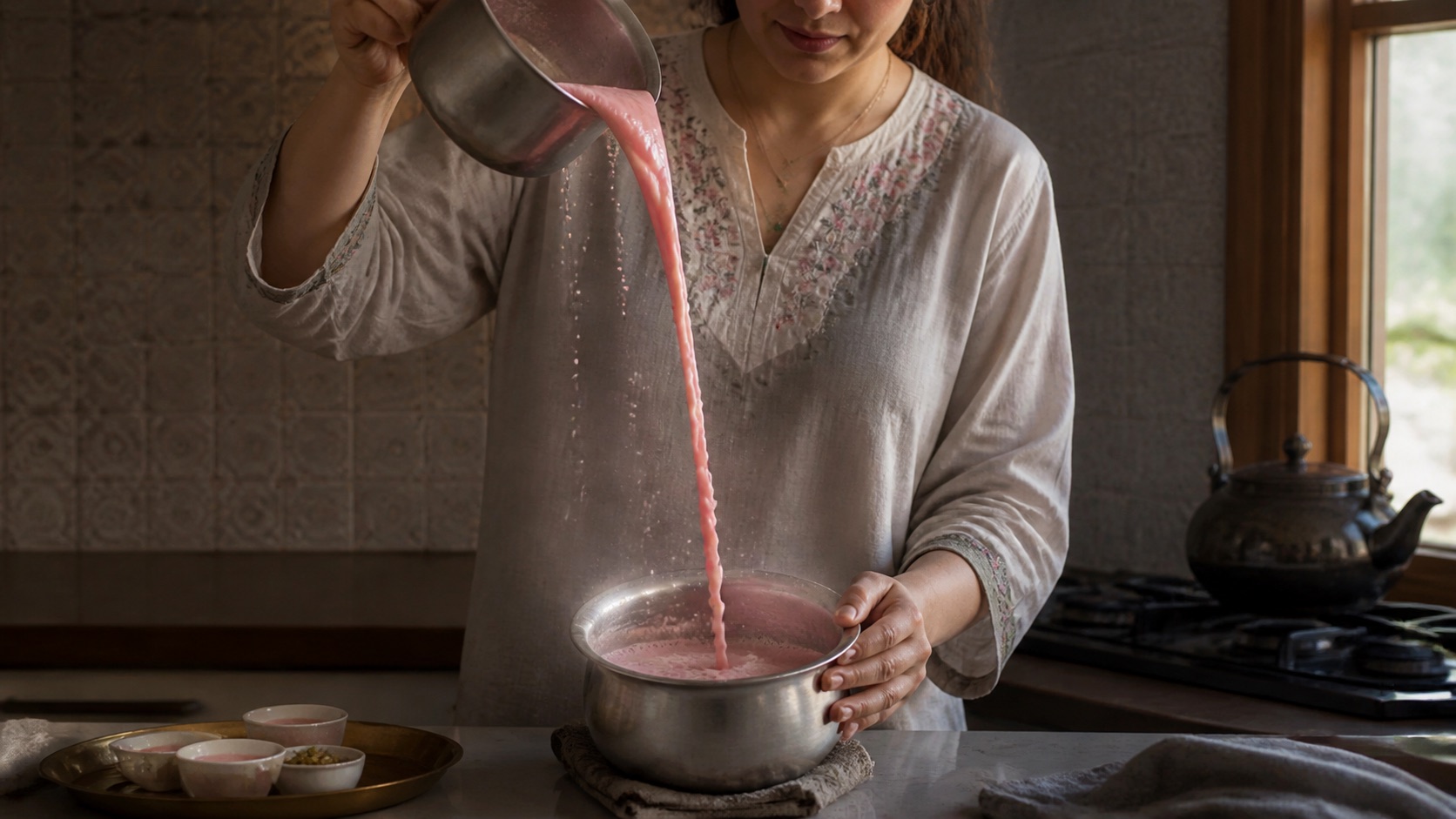
The colour of Kashmiri chai is an outcome, not an ingredient hunt. Tea, alkalinity, aeration, concentration and milk interact; forcing neon pink with excess bicarbonate produces an unpleasant cup.
Develop the base before adding milk
Use tea sold for Kashmiri or noon chai and follow its quantity guidance. Simmer it in water with a very small measured amount of bicarbonate if your recipe calls for it. Whisking or repeatedly lifting the liquid introduces air while the base reduces. A cold-water addition can help the traditional process, but no single theatrical pour replaces patient extraction.
The concentrated base may look burgundy-brown rather than pink. Strain it, then add milk gradually while simmering; this is when the cup’s colour becomes visible. Different leaves, water and milk produce different shades. Judge aroma and balance before the photograph.
| Problem | Likely response |
|---|---|
| Soapy taste | Too much bicarbonate; restart rather than disguise it |
| Pale and weak | Base needed more tea or reduction |
| Bitter | Over-extraction or unsuitable leaves |
| Skin forming | Serve promptly or stir gently over low heat |
Salt defines noon chai; sweet Kashmiri chai is also common in Pakistani households. State which version you are making. Finish with pistachio or almond only if wanted. A nuanced mauve cup that tastes right is a greater success than a vivid one that tastes of chemistry.
Scale for a gathering
Scale the base, not the finished milk tea. A large pot is harder to aerate and easier to scorch, whereas concentrated base can be portioned consistently. Keep one unsweetened so each cup can be adjusted. Note that colour may shift as the tea stands; this is not a reason to keep boiling it.
Make a base for guests
Prepare the concentrated tea base earlier, cool it promptly and refrigerate it, then finish smaller batches with milk as guests arrive. Record tea weight, water volume, pan and reduction time so the result can be repeated; “boil until pink” is not a transferable recipe. Offer salt and sugar according to the version being served, and tell guests when nuts are used. Dairy alternatives vary in colour and stability, so test one cup before making a pot. Reheat gently and discard milk tea that has been held unsafely. The ceremony of aeration belongs in the making, but hospitality belongs in a cup served at the right temperature.
Filed under
Keep reading
Related stories
More from this desk, this beat, and the tags on this piece.


Office chai for ten people: scaling a pot without losing balance
Hassan Raza · 13 Sep 2026 · 15 min

Readers
The conversation
0 notes
Anyone can leave a note. Guests add a name and email — no account required, and the email is never published.
No notes yet. Yours would be the first.