Ajrak is a process, not just a red-and-blue print
Ajrak is not simply a geometric pattern. Traditional cloth is built through repeated block-printing, resist, dye and washing stages that connect craft technique with Sindhi identity.
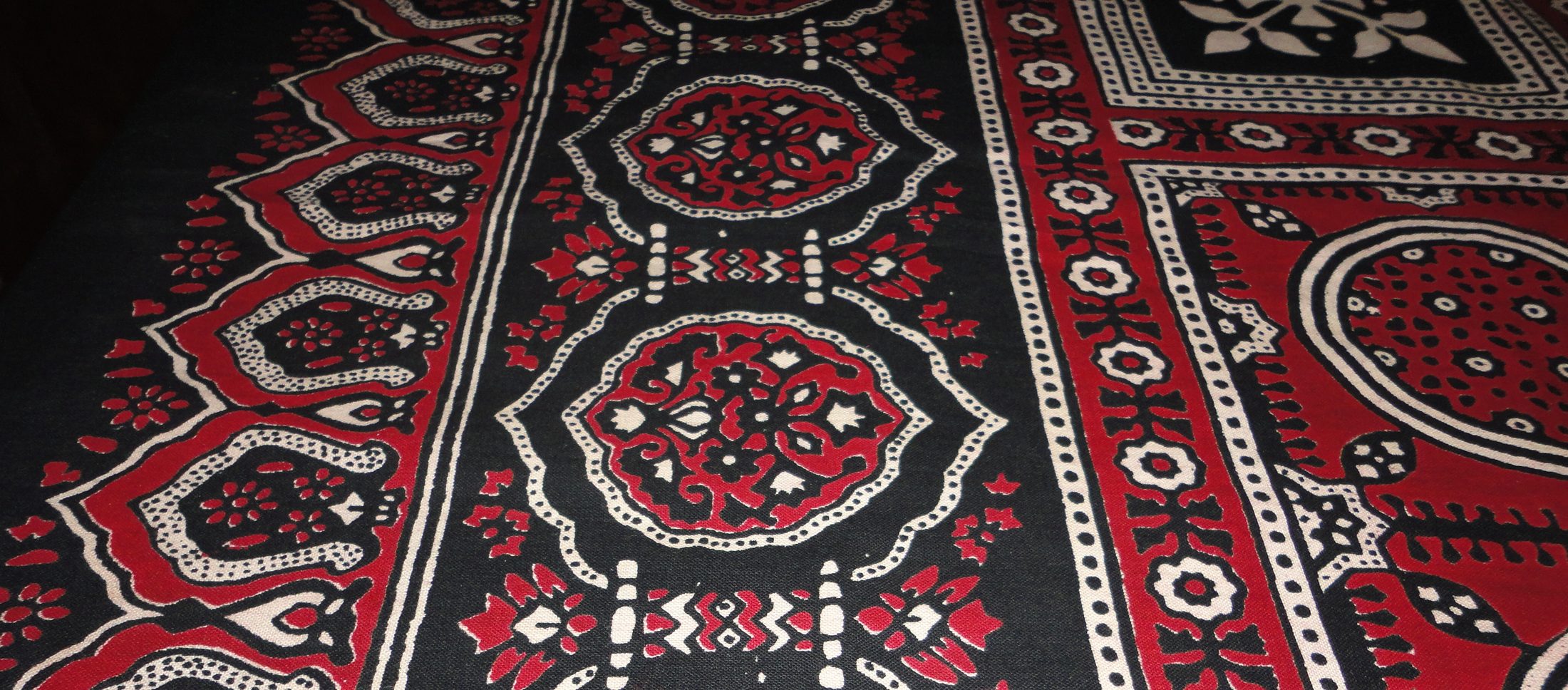
Ajrak is often reduced in fashion retail to a red-and-blue geometric print. That misses the part that makes the textile culturally and technically distinctive: traditional Ajrak is a multi-stage hand-block process in which resist pastes, dyes, washing and repeated alignment build the pattern into cotton over time.
Government of Sindh material describes Ajrak as a symbol of Sindhi culture. Recent ethnographic research also documents pressure on artisan practice from water shortages, rising material costs and machine-made imitations, making process literacy part of responsible buying.
Ajrak as Sindhi identity
Ajrak is worn, gifted and displayed across Sindh in ways that go beyond ordinary printed cloth. It appears in ceremonial exchange, political and cultural events, daily dress and hospitality, giving it a social meaning that a machine copy can imitate visually without reproducing.
That does not make every inexpensive printed Ajrak illegitimate as clothing. It does mean shoppers should distinguish between a design inspired by Ajrak and hand-block cloth made through the traditional process.
The visual grammar
Deep indigo, rich red, black and reserved cream or white form the familiar palette. Repeated geometric and floral units are organised with strong borders and central fields so the cloth reads as a complete composition rather than random all-over print.
Different workshops and regions vary motifs. Treat claims that one pattern is the only 'original' Ajrak with caution unless the seller can explain the specific tradition.
Why carved blocks matter
A hand printer uses carved wooden blocks to place different parts of the design. Separate blocks may carry outlines, resist, colour or infill, and repeated registration has to remain accurate across a long cloth.
Slight shifts and small irregularities can therefore be evidence of hand work rather than defects. Perfectly identical repeats can indicate screen, roller or digital production.
Resist printing creates the reserved areas
Traditional methods protect selected parts of the cotton so later dye stages do not colour them. The printer builds the design by alternating what is blocked, mordanted or exposed.
This is why Ajrak cannot be understood as one pass of coloured ink. The final surface records multiple interventions.
Indigo and red require different chemistry
Indigo dyeing works through reduction and oxidation: cloth can emerge from a vat looking greenish before oxygen develops the blue. Red shades traditionally rely on mordant and dye chemistry that binds colour differently.
Modern workshops may vary exact materials for cost, availability or environmental reasons. A responsible article should not pretend every Ajrak sold today uses the same historic recipe.
Water is part of the craft
Repeated washing is central to removing pastes, developing colour and preparing the cloth for the next stage. Research with Sindhi artisans has identified clean-water scarcity as a major contemporary challenge.
That makes water infrastructure a craft-preservation issue, not merely an environmental side note.
Why traditional production takes time
Each stage must dry, wash or react before the next stage can be completed. A cloth that involves many print and dye cycles cannot be made at the speed of a digital printer.
Time therefore contributes directly to cost. Extremely low prices should prompt a question about process rather than automatic suspicion of the seller's honesty.
Handmade variation versus poor workmanship
Misregistration of a millimetre, tiny dye spots and tonal variation can be part of hand printing. Large unprinted gaps, weak fabric, unstable dye or severe distortion are different issues.
Ask sellers to show both sides and close details. Traditional hand-block Ajrak is often visually rich from both sides because dye penetrates the cloth rather than sitting as a surface photograph.
Machine-made Ajrak-style textiles
Table, screen and digital printing make Ajrak imagery accessible at lower cost. They can be practical choices for everyday clothing, home textiles and large events.
The ethical problem arises when machine print is marketed as hand-block artisan work and priced on that claim.
Buying in a way that supports the craft
Ask who printed the cloth, where it was made, whether it is hand block or machine printed and what dyes or processes the workshop uses. Sellers who work closely with artisans should be able to answer without vague heritage language.
Paying a fair price matters, but so does accurate labelling. Consumers cannot reward skilled work if the market hides the difference.
What the evidence can and cannot tell you: Ajrak is a process, not just a red-and-blue print
Ajrak has a long and widely repeated origin story, and some popular accounts make very precise claims about age or etymology that are harder to verify than the living craft itself. This guide therefore focuses on documented contemporary practice and avoids treating one origin legend as settled history.
For Ajrak Sindh history block printing, the most useful approach is to separate verified material facts from shop language, inherited terminology and aesthetic preference. Where a label has a legal or technical meaning, read the fibre or product disclosure. Where the term is cultural rather than standardised, ask the seller what construction, material and process they actually mean.
A practical PakStyles checklist: Ajrak is a process, not just a red-and-blue print
- Ask whether the cloth is hand-block or machine printed.
- Look at repeat alignment and both sides of the cloth.
- Ask where the cloth was printed and by whom.
- Expect hand-made variation without accepting major faults.
- Follow the maker's washing instructions because natural and synthetic dye systems can behave differently.
Understanding Ajrak as process changes the purchase. The red and blue are still beautiful, but the real value sits in the accumulated block placement, dye knowledge, water work and artisan judgement that turns cotton into a textile carrying Sindhi identity.
Why photographs can mislead even when they are not edited: Ajrak is a process, not just a red-and-blue print
Campaign photography changes how Ajrak Sindh history block printing is perceived. Studio light increases sheen, pins create temporary drape, steaming removes handling marks and model proportions can make a garment or accessory appear lighter, longer or more structured than it will in ordinary use. None of that requires deceptive editing; it is simply the difference between styling and specification.
How climate and diaspora use change the decision: Ajrak is a process, not just a red-and-blue print
Pakistani clothing and craft products often move between climates. Ajrak Sindh history block printing may be produced with Lahore, Karachi, Multan or Peshawar conditions in mind and then worn in Birmingham, Manchester or Glasgow. Heating, rain, winter coats and long indoor events change what feels practical even when the cultural setting is the same.
Handmade variation versus poor quality: Ajrak is a process, not just a red-and-blue print
Hand production connected to Ajrak Sindh history block printing can leave small differences in repeat placement, stitch tension, dye tone or surface finish. Those variations may document process rather than negligence. The useful question is whether the variation is structurally harmless and visually consistent with the making method.
Care is part of value: Ajrak is a process, not just a red-and-blue print
The cost of ajrak Sindh history block printing is not only the checkout amount. If the item needs specialist cleaning, careful flat storage, tissue padding, regular repair or a climate-controlled place to avoid damp, those demands belong in the ownership calculation.
Keep the care label, seller instructions and spare material together. For formalwear and handmade textiles, photograph the piece before the first clean and save details of any alteration or repair. That record can extend usable life and makes future professional care less guess-based.
How to judge authenticity claims without becoming a laboratory: Ajrak is a process, not just a red-and-blue print
Most consumers cannot chemically identify fibre or date a textile at home, and they should not be expected to. For ajrak Sindh history block printing, use several modest signals together: accurate labelling, plausible pricing, maker or region information, construction details, clear photographs and a seller willing to answer technical questions.
What modern adaptation gets right: Ajrak is a process, not just a red-and-blue print
Contemporary versions of ajrak Sindh history block printing can simplify production, reduce price, change fibre or adapt the format for new wardrobes. That does not automatically make them culturally empty. Living traditions survive partly because makers and wearers change how forms are used.
A better comparison method: Ajrak is a process, not just a red-and-blue print
When comparing two options around ajrak Sindh history block printing, use the same criteria for both: material, construction, dimensions, care, comfort, origin, expected lifespan and price. Marketing categories become much less confusing when every candidate is placed on the same practical grid.
The reader's final decision: Ajrak is a process, not just a red-and-blue print
The strongest reason to learn about ajrak Sindh history block printing is not to police other people's terminology. It is to make a purchase, styling choice or care decision with fewer surprises. Technical knowledge should create flexibility rather than another authenticity exam.
How to separate the name from the material reality: Ajrak is a process, not just a red-and-blue print
With ajrak Sindh history block printing, the first useful habit is to separate the market name from the physical object. Retail and cultural vocabulary can carry history, prestige and regional meaning, but a buyer still needs to know fibre, construction, dimensions, finish, weight, fastening or production method where those details affect use. That distinction prevents a descriptive word from doing more work than it can support.
For a practical purchase or styling decision, write down what the object must do before judging what it is called. A shawl may need warmth without bulk, a dupatta may need grip, a formal coat may need to survive six hours of sitting and movement, and a textile may need to tolerate ordinary cleaning. Those jobs are measurable even when terminology overlaps.
What a trustworthy seller or maker should be able to explain: Ajrak is a process, not just a red-and-blue print
A strong seller response to questions about ajrak Sindh history block printing should become more specific as the price rises. You should be able to ask what the material is, where it was produced, whether work is hand or machine made, what dimensions are supplied, how the item should be cleaned and which parts of the description are traditional names rather than regulated specifications.
Sources and official profiles
Was this helpful?
Keep reading
Related stories
More from this desk, this beat, and the tags on this piece.
Phulkari beyond the wedding shawl: how Punjab's embroidery is built
Bilal Ahmed · 8 Oct 2026

A nikah in England is not automatically a civil marriage: check the legal registration
Bilal Ahmed · 28 Oct 2026
Walima explained: what the reception is for and why every family does it differently
Bilal Ahmed · 27 Oct 2026
Dholki, mayun and mehndi: why Pakistani pre-wedding events are not the same thing
Bilal Ahmed · 25 Oct 2026


Sending money from the UK to Pakistan: compare the amount received, not the fee alone
Bilal Ahmed · 20 Oct 2026
Readers
The conversation
0 notes
Anyone can leave a note. Guests add a name and email — no account required, and the email is never published.
No notes yet. Yours would be the first.