Workwear
How to measure yourself for Pakistani clothes online
A tape-measure lesson for comparing your body and a trusted garment with Pakistani size charts—without guessing from the label.
By Zainab Noor
Fashion writer
3 min read
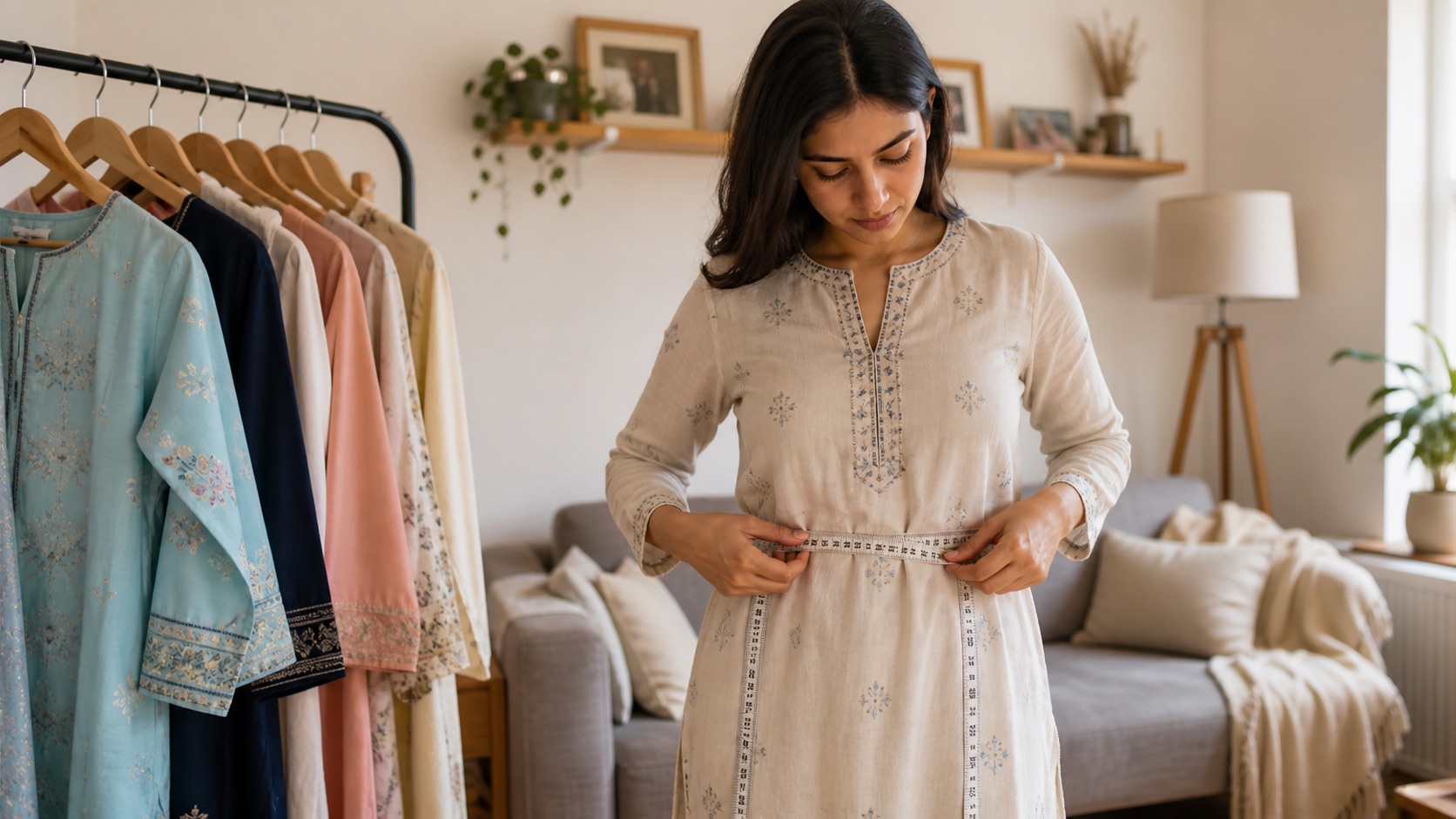
Put the size label out of sight. The best tool for buying Pakistani clothes online is not a conversion chart; it is one kameez you already reach for because the shoulder sits correctly, the hip does not catch and the sleeve ends where you like it.
First measure the clothes that work
Button or fasten the garment, smooth it on a flat surface without stretching it, and use a soft tape. Record the shoulder from seam to seam; chest and hip straight across, then doubled; sleeve from shoulder seam to cuff; armhole depth; and finished length from the high shoulder beside the neck. For trousers, note waist, hip, rise, thigh, inseam and finished opening. Photograph where the tape begins and ends so “sleeve” does not mean two different things when you compare a listing later.
Write garment beside every number. A retailer may publish body measurements, finished-garment measurements or an unexplained mixture. Ask which. If your body chest and the listed garment chest are identical, there is no ease; that may be intentional in a stretch fabric and impossible in a rigid woven shirt.
Then measure the person
Wear the underclothes and layers intended for the outfit. Keep the tape level and comfortably close rather than pulling it tight. Measure the fullest chest, natural waist and fullest hip. Let the arm rest with a slight bend for sleeve length. For kameez length, begin at the high shoulder and allow the tape to fall over the body rather than holding it in a straight line through space.
| Decision | Useful measurement | Why it changes the fit |
|---|---|---|
| Close neckline | Neck circumference and opening depth | A neckline can match the photograph yet feel restrictive when seated. |
| Straight kameez | Garment hip and side-slit height | The shirt needs room where the body is widest, especially below a short slit. |
| Fitted sleeve | Upper arm, elbow and cuff | A generous chest does not guarantee usable sleeve width. |
| Gharara or wide trouser | Rise and outseam with shoes | Volume changes where the garment hangs and whether the hem reaches the floor. |
Compare shape, not only circumference
Two garments with the same chest can fit differently because of shoulder slope, armhole, dart position, fabric and cut. If you fall between sizes, locate the least alterable point. Shoulders and embroidered armholes are harder to rebuild than a plain side seam; an ornate border may make shortening expensive. Ask about seam allowance before relying on “a tailor can fix it.”
Send the seller a small set of precise questions instead of your entire tape-measure notebook: “Is 112 cm the body or finished bust? What is the garment hip at my size? Is there seam allowance at the side? Does the stated length include the border?” A reliable answer gives you something concrete to compare. “It should fit” does not.
Filed under
Keep reading
Related stories
More from this desk, this beat, and the tags on this piece.
Office Eid lunch dressing: festive without looking ceremony-ready
Zainab Noor · 13 Sep 2026 · 15 min
What to wear to a job interview when you prefer Pakistani clothes
Zainab Noor · 13 Sep 2026 · 17 min
Pakistani workwear for teachers: movement, pockets and washability
Zainab Noor · 13 Sep 2026 · 16 min
Readers
The conversation
0 notes
Anyone can leave a note. Guests add a name and email — no account required, and the email is never published.
No notes yet. Yours would be the first.