Raising children with Urdu and English: keep the home language useful, not ceremonial
Bilingual children need meaningful reasons to use Urdu, not weekly correction sessions. Build it into stories, grandparents, jokes, food, errands and ordinary family conversation.
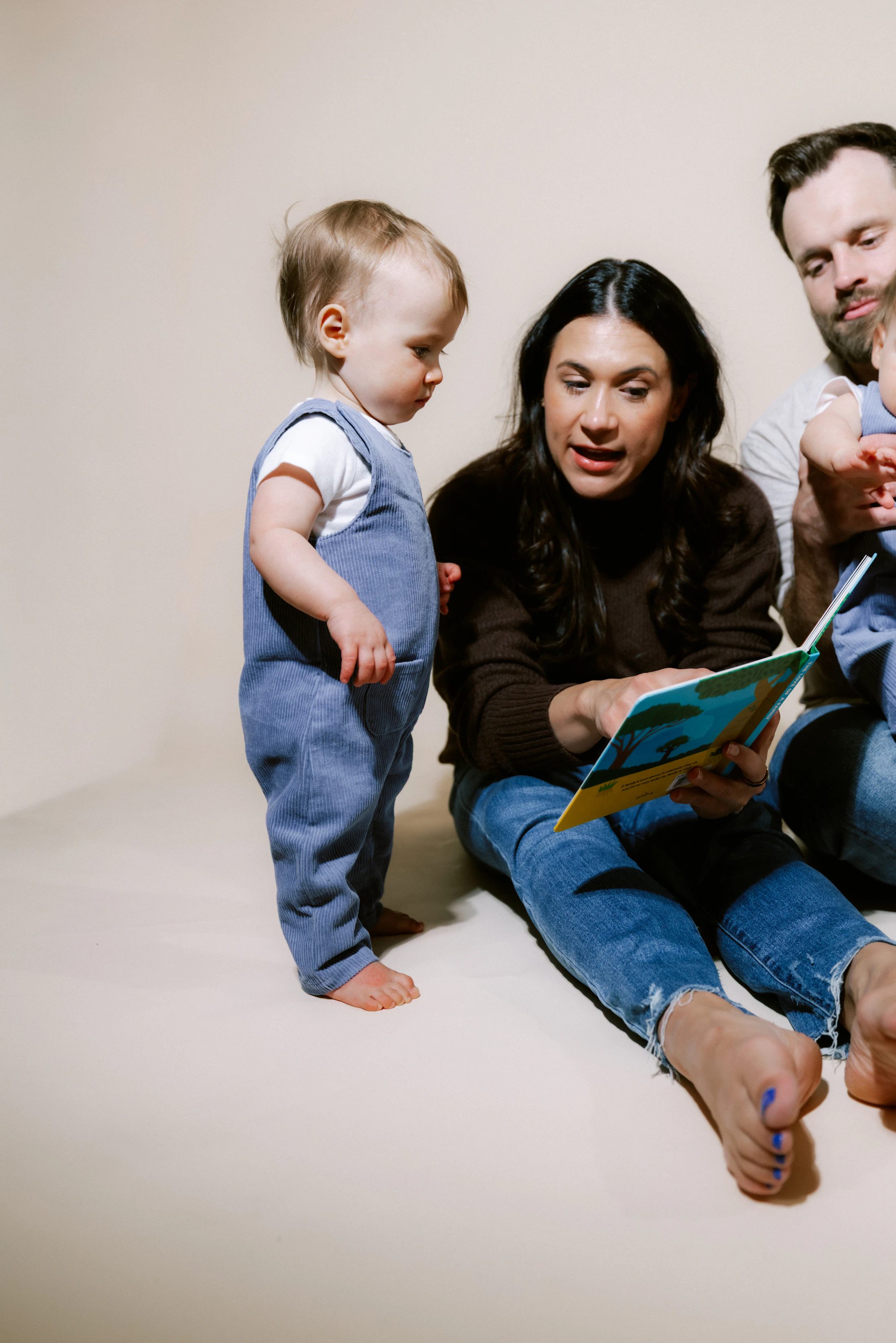
A child who answers Urdu in English has not rejected the family. They have usually chosen the language that is easiest in that moment. If school, friends, television and most books happen in English, Urdu needs a reason to stay useful beyond being the language adults test at weddings.
Speak the language you can speak naturally
Multilingualism does not confuse children or cause a language disorder. Children can learn more than one language, and using the family language supports communication with relatives, culture and identity.
If your Urdu is mixed with English, that is still a real household language. Do not stop speaking because you think only perfect literary Urdu counts.
Give Urdu jobs that English does not already own
Use it for calling grandparents, bedtime stories, family jokes, recipes, shopping lists, cricket commentary or voice notes to cousins. A language becomes durable when it does something.
“Say this in Urdu” turns conversation into a quiz. “Dadi ko batao school mein kya hua” gives the child a person to talk to.
Reading can be bilingual rather than segregated
Keep Urdu books where children can reach them. Read the Urdu text, explain a difficult word in English if needed, then carry on. Translating every sentence twice can make a five-minute story feel like a lesson.
Roman Urdu can be a bridge for parents and older children who speak more confidently than they read the script. It is not a reason to abandon Urdu script; it is simply another route into use.
Let grandparents be language partners, not examiners
Ask relatives not to laugh at accents or grammar. A child who is corrected publicly every time they attempt Urdu will quickly learn that English is safer.
Grandparents can ask concrete questions, tell stories, play games and repeat words naturally. Relationship carries language better than embarrassment.
Mixing languages is normal
Bilingual speakers switch between languages. A sentence containing both Urdu and English is not proof that the child “knows neither properly”. Vocabulary can be distributed across two languages, especially when each language belongs to different parts of life.
Speech concerns still deserve proper support
A genuine speech, language or communication difficulty can affect more than one language. If you are worried about development, speak with your health visitor, GP, school or speech and language therapy service. Do not drop the home language as a DIY treatment unless a qualified professional who understands multilingual development gives a specific reason.
Choose consistency that your family can actually live with
One-parent-one-language works for some homes; Urdu-at-home works for others; mixed bilingual conversation works for many. The best system is the one adults can sustain without turning every breakfast into a language policy meeting.
Children keep languages that remain connected to people, humour, affection and everyday usefulness. Urdu does not need to be preserved behind glass. Let it live in the kitchen.
Money should not become the hidden measure of respect: Raising children with Urdu and English
With raising bilingual Urdu English children as the focus, Weddings, Eid and remittances can create strong pressure to prove affection through spending. Set a household budget before asking what other people give. Gifts and hospitality work best when they do not create debt or resentment.
Make space for people who opt out: Raising children with Urdu and English
In practical terms for raising bilingual Urdu English children, Not every family observes every wedding event, gift custom, language practice or religious routine. Interfaith, intercultural, queer and less traditional households may adapt significantly. Participation should not depend on pretending those variations do not exist.
A respectful explanation of a tradition can include the fact that some people skip it. That makes the guide more accurate, not less celebratory.
Keep the purpose visible: Raising children with Urdu and English
Behind raising bilingual Urdu English children there is usually a human purpose: welcoming, feeding, marking a transition, keeping family connections or making a commitment public. When logistics become overwhelming, return to that purpose.
Applied specifically to raising bilingual Urdu English children, Traditions remain meaningful when they help people relate to one another. The most sustainable version is rarely the one with the longest checklist; it is the one a family can carry forward without losing the people inside it.
Start by assuming there is more than one Pakistani version: Raising children with Urdu and English
For raising bilingual Urdu English children, family, region, language, religion, class and migration history can all change what feels normal. A Lahore household, a Mirpuri family in Birmingham and a Karachi family in Houston may use the same word for traditions that look different in practice.

Separate cultural practice from legal or religious requirement: Raising children with Urdu and English
For a reader working through raising bilingual Urdu English children, Some customs are social expectations, some are religious practices and some have legal consequences. Those categories can overlap but should not be blurred. A wedding tradition does not automatically create a legal marriage, and a family preference does not become a religious obligation because it is old.
Diaspora changes logistics as much as identity: Raising children with Urdu and English
For raising bilingual Urdu English children in particular, In Britain and other diaspora settings, venue rules, work schedules, school calendars, housing and international travel compress traditions that may once have unfolded over many days. Combining events is often practical rather than evidence that culture is disappearing.
Families also create new habits: digital invitations, bank-transfer gifts, bilingual ceremonies and mixed menus. These can sit alongside older customs without cancelling them.
Language should help people participate: Raising children with Urdu and English
With raising bilingual Urdu English children as the focus, Kinship terms, wedding vocabulary and etiquette are useful when they make relationships clearer. They become less useful when used to test whether a younger relative is “Pakistani enough”. Explain unfamiliar words, translate where needed and correct gently.
For children and partners joining the culture, attach words to real people and actions. Context teaches faster than a lecture.
Questions to resolve before acting on Raising children with Urdu and English
What is personal? Body measurements, health conditions, family expectations, budget, climate and skill level can change the best choice. Use the article as a framework rather than forcing your circumstances into somebody else's exact answer.
How to use the Raising children with Urdu and English information
Save the small number of details that would be annoying to reconstruct later: measurements, booking references, successful ingredient ratios, product names, alteration notes or family decisions. A short record turns the next purchase, trip, meal or event from a fresh problem into an iteration.
Finally, prefer a reversible experiment when one is available. Test one skincare product, cook a half batch, pin the dupatta at home, make a small transfer, walk a shorter route or ask the host one clear question. Low-cost tests produce better information than making a large commitment because the first answer sounded confident.
How to talk about raising children with urdu and english without turning it into a rule
Use language such as “in many families”, “in our household” or “traditionally” where variation is real. That leaves room for regional, sectarian, class and diaspora differences and is more accurate than presenting one wedding or family practice as the national template.
When somebody does things differently, ask what the custom means in their family before correcting the label. Shared words can carry different histories.
Keep the practical purpose in view: Raising children with Urdu and English
With raising children with urdu and english as the focus, If the tradition is creating financial, logistical or emotional strain, separate the purpose from the performance. A smaller event can still welcome people; a simpler gift can still show affection; a bilingual explanation can still carry cultural meaning.
Traditions last because families adapt them to real lives. Respect is better measured by clarity, generosity and consent than by how precisely one household reproduces another household's checklist.
Give Urdu jobs that matter in everyday life
A home language survives when children need it for real relationships and routines, not only when adults ask them to repeat vocabulary. Urdu can be the language used for a weekly call with grandparents, a bedtime story, a recipe cooked together or a voice note to relatives. That creates repeated, meaningful exposure without turning every conversation into a lesson. If a child answers in English, the adult can continue naturally in Urdu rather than stopping the exchange to correct every sentence.
Using the Raising children with Urdu and English advice in real life
separate the useful convention from the idea that every Pakistani family follows one fixed rule. Region, language, generation, religious practice, budget and diaspora life can all change how the same event or habit looks. Use the guide to understand the logic, then ask the people directly involved how their household handles the detail.
With raising children with urdu and english, that approach also makes disagreements easier to manage. Instead of arguing over which version is “authentic”, identify the practical decision—who is invited, what is expected, what a term means in this family, or what must happen before the day. Clear information protects relationships better than turning a flexible custom into a test of belonging.
Sources and official profiles
Was this helpful?
Keep reading
Related stories
More from this desk, this beat, and the tags on this piece.


Sending money from the UK to Pakistan: compare the amount received, not the fee alone
Bilal Ahmed · 20 Oct 2026

Eid gifts for children without turning the house into a toy warehouse
Bilal Ahmed · 12 Oct 2026

What to take from the UK for relatives in Pakistan without packing for everybody
Bilal Ahmed · 9 Oct 2026

A nikah in England is not automatically a civil marriage: check the legal registration
Bilal Ahmed · 28 Oct 2026

Urdu and Panjabi in England and Wales: what Census 2021 language data shows
Bilal Ahmed · 28 Oct 2026
Readers
The conversation
0 notes
Anyone can leave a note. Guests add a name and email — no account required, and the email is never published.
No notes yet. Yours would be the first.